


Finding a digital marketing agency is easy. Finding one that understands your sales cycle, your budget, and the customers you actually want is harder. At Velautec Media, we believe small-business marketing should connect search visibility, useful content, website experience, and qualified inquiries—not just impressions and clicks.
This 2026 guide organizes 50 digital marketing agencies to research. It includes a closer look at 20 providers, a directory of 30 additional options, and a practical evaluation framework for local service businesses, B2B companies, construction firms, ecommerce teams, and agencies seeking white-label support. This is an editorial directory, not a claim that we independently audited, tested, or ranked all 50 businesses.
Quick answer: which kind of marketing agency should a small business choose?
- For local service leads: prioritize local SEO, Google Business Profile expertise, service-area content, review management, and call tracking.
- For B2B and industrial sales: prioritize commercial search intent, useful technical content, lead qualification, CRM integration, and targeted outreach.
- For ecommerce: look for shopping-platform experience, product/category SEO, paid media, merchandising, and repeat-purchase measurement.
- For established paid advertising programs: evaluate attribution, conversion-rate optimization, creative testing, and sales-qualified lead metrics.
- For agencies outsourcing execution: review white-label delivery standards, security, reporting, turnaround times, and account ownership.
What does a digital marketing agency do for a small business?
A digital marketing agency helps a company attract potential customers and turn attention into business opportunities through online channels. Services may include SEO, paid advertising, website design, content marketing, email, social media, conversion optimization, analytics, and brand reputation. Different providers specialize in different combinations of these services.
A small contractor may need to rank for service searches in a specific city and turn those visits into quote requests. A manufacturer may need technical landing pages that persuade purchasing managers. A restaurant or retailer may depend more on local discovery, repeat visits, or paid promotions. The right provider begins with those differences rather than prescribing the same marketing package to every company.
How to compare agencies without getting distracted by rankings
An agency can have impressive traffic, a large team, or many online reviews and still be a poor match for your business. Before requesting proposals, define the outcomes you want, the markets you serve, the resources you can commit, and who will follow up with the leads.
- Relevant experience: ask for examples from businesses with similar sales cycles, average customer values, and geographic coverage.
- Clear scope: identify the exact pages, campaigns, assets, or technical improvements included.
- Commercial measurement: clarify which inquiries count as qualified leads and how sales feedback informs marketing decisions.
- Access and ownership: retain appropriate ownership of analytics, advertising accounts, websites, and business listings.
- Communication: establish the meeting cadence, reporting format, and responsible delivery team.
- Realistic expectations: avoid guarantees of specific organic rankings or an identical outcome to another client.
20 digital marketing agencies: closer look
The following profiles summarize each company’s positioning and explain what a small-business buyer should ask before selecting it. The order reflects the source directory, not a new Velautec performance ranking. Website details, service menus, and engagement terms should be confirmed directly with each provider.
1. WebFX

Focus: Full-service marketing with measurement and attribution. Website: webfx.com.
WebFX offers a broad menu of digital marketing services, which can appeal to companies that want search, advertising, content, and conversion work managed within one organization. A benefit of an integrated provider is that the website, campaigns, and reporting can be coordinated rather than planned in isolation.
For a smaller company, the key question is whether it will receive the same strategic attention as a large account. Ask who will handle the day-to-day campaign, how often priorities are reviewed, and whether reporting connects marketing activity to qualified inquiries instead of only visits.
Potential fit: Established businesses that need several marketing disciplines working together.
What to ask: Ask for a sample lead-to-revenue report and the names or roles of the specialists assigned to your account.
2. KlientBoost

Focus: Performance advertising and landing-page conversion. Website: klientboost.com.
KlientBoost is closely associated with performance marketing, particularly paid media and landing-page optimization. This approach may suit businesses with measurable acquisition goals and the ability to track the journey from ad click to customer conversation.
A campaign can generate plenty of leads and still perform poorly if those contacts are not relevant or sales-ready. A service business should define lead quality, location, job size, and sales-stage metrics before choosing an agency or committing significant ad spend.
Potential fit: Growth-oriented businesses that want to test paid search, paid social, and conversion improvements.
What to ask: Ask how landing-page experiments are prioritized and which CRM or offline-conversion signals inform optimization.
3. SmartSites
Focus: Website design combined with SEO and paid marketing. Website: smartsites.com.
SmartSites brings website services together with organic and paid acquisition. That combination can be useful for small businesses whose website does not yet communicate services clearly or convert mobile visitors effectively.
If a company needs a redesign, request an SEO migration plan before changing URLs, templates, or navigation. A visually improved website can still lose valuable search visibility when important pages disappear or redirects are overlooked.
Potential fit: Service businesses seeking an updated website alongside acquisition campaigns.
What to ask: Ask for examples of redesigns that preserved organic traffic and improved quote-request conversions.
4. Disruptive Advertising

Focus: Paid media efficiency and campaign optimization. Website: disruptiveadvertising.com.
Disruptive Advertising emphasizes performance-focused media and conversion strategy. The potential advantage is a structured approach to deciding which audiences, messages, and landing pages deserve a share of the advertising budget.
This matters in expensive B2B markets, where a few irrelevant clicks can consume a meaningful amount of spend. Owners should look beyond cost per lead and evaluate which campaigns bring qualified conversations and proposals.
Potential fit: Companies already investing in advertising and seeking better efficiency.
What to ask: Ask how the team measures qualified pipeline, excluded audiences, and lead quality over time.
5. Power Digital
Focus: Multi-channel growth programs and marketing analytics. Website: powerdigitalmarketing.com.
Power Digital combines multiple marketing disciplines with data-led planning. This broad approach may be attractive when a business has enough demand and operational capacity to benefit from coordinated paid, organic, and retention campaigns.
Smaller clients should clarify what the engagement includes and which team members will work on the account. A sophisticated reporting stack is only valuable when someone uses the information to make effective improvements.
Potential fit: Growing brands that need an integrated, multi-channel marketing plan.
What to ask: Ask what a realistic first-quarter scope looks like for your budget and industry.
6. Incrementors
Focus: Search-focused marketing for local and ecommerce businesses. Website: incrementors.com.
Incrementors works across SEO, advertising, web design, and lead generation. For smaller service providers, the practical attraction is the ability to focus on searches that indicate a customer is ready to compare vendors or request an estimate.
When evaluating an SEO proposal, review sample service pages, location strategies, technical priorities, and the process for tracking phone calls or contact forms. Visibility alone does not demonstrate that a campaign is producing useful opportunities.
Potential fit: Local businesses and growing online stores that need measurable acquisition.
What to ask: Ask which three high-intent keyword groups would be prioritized and why.
7. CIENCE Technologies

Focus: B2B outbound prospecting and sales-development support. Website: cience.com.
CIENCE differs from a typical website-first marketing agency. Its positioning centers on B2B prospect identification, outreach, and sales development, making it a potentially relevant comparison for companies with a clearly defined list of target accounts.
This type of service may complement SEO rather than replace it. SEO helps prospects discover the company during research; outbound can introduce a supplier to buyers who have not yet searched. Both channels depend on useful messaging and a credible business website.
Potential fit: B2B companies looking for structured prospecting and sales meetings.
What to ask: Ask how accounts are sourced, how contact data is verified, and what qualifies as a successful meeting.
8. Webdew

Focus: HubSpot-centered websites, CRM, and inbound marketing. Website: webdew.com.
Webdew is relevant to businesses that want marketing operations aligned with HubSpot. Connecting the website, content, forms, and CRM can reduce the gap between attracting visitors and managing the resulting inquiries.
Before selecting a provider, define which customer information must flow between the website and sales process. A dashboard full of contacts is not useful if no one can distinguish a serious buyer from spam or an irrelevant request.
Potential fit: Teams using HubSpot or planning a connected inbound-sales setup.
What to ask: Ask for a sample form-to-CRM workflow and lead-qualification rules.
9. Brainvire Infotech Inc

Focus: Ecommerce technology alongside digital marketing. Website: brainvire.com.
Brainvire combines technology development and online marketing services. That can be appropriate when a company needs more than a campaign—for example, ecommerce engineering, systems integration, and acquisition planning under a coordinated project.
A small business should separate essential launch requirements from future enhancements. Building an elaborate commerce system before validating demand may create unnecessary costs and delays.
Potential fit: Ecommerce and technology-dependent businesses needing development and marketing support.
What to ask: Ask which workstreams are essential at launch and how ongoing SEO ownership will be handled.
10. Jives Media
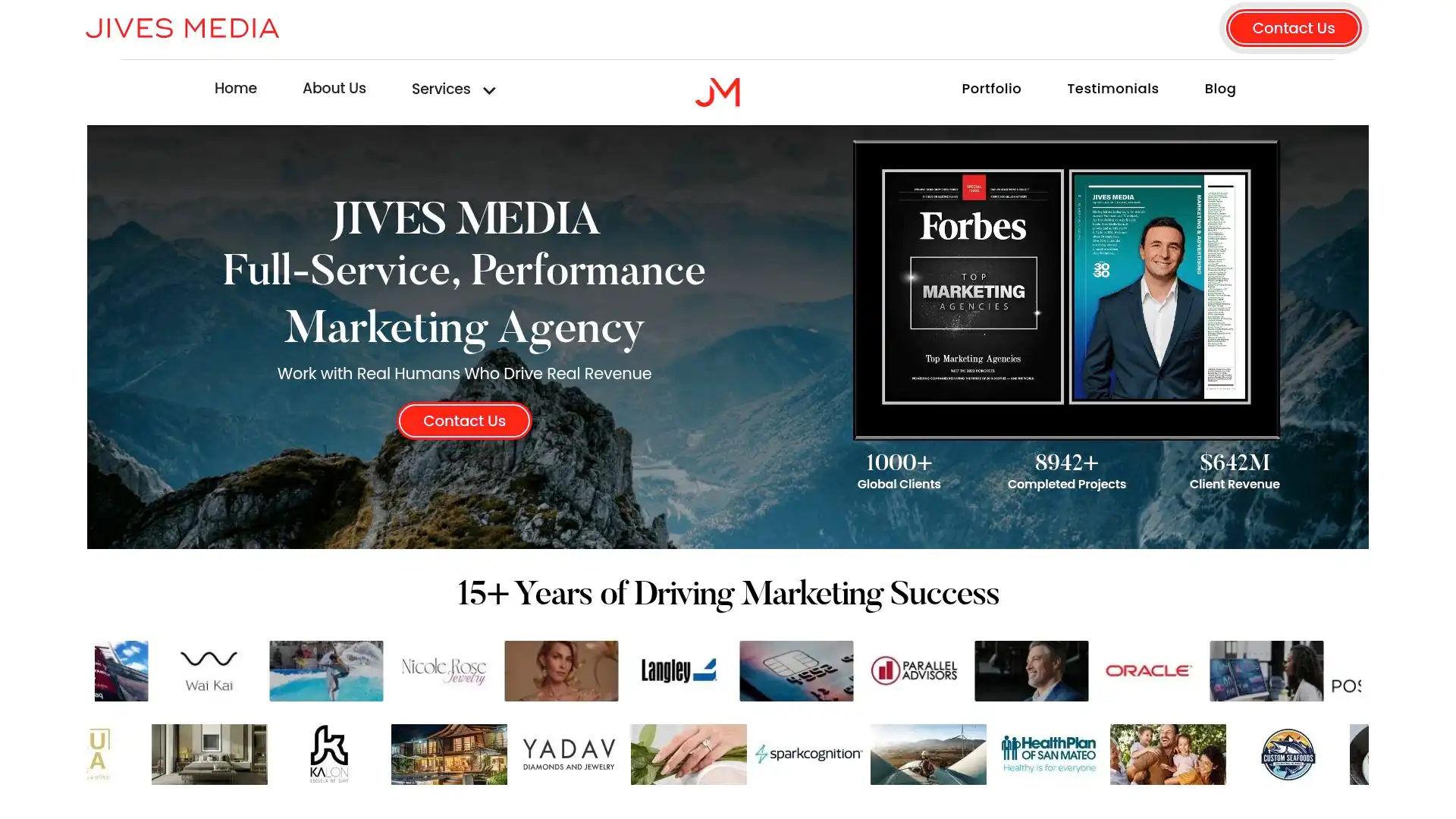
Focus: SEO, advertising, and branding with a smaller-team approach. Website: jivesmedia.com.
Jives Media offers a mix of marketing services that can interest owners seeking a partner rather than a large collection of separate specialists. For many local businesses, the essential goal is consistent positioning across website content, campaigns, and business listings.
Pay attention to how the agency translates business objectives into an executable plan. A strong proposal should state which pages, offers, or channels will be improved first and what evidence will be used to judge progress.
Potential fit: Small and mid-sized businesses seeking coordinated acquisition and brand work.
What to ask: Ask to meet the actual delivery team and review an example of its first 90-day plan.
11. Coalition Technologies
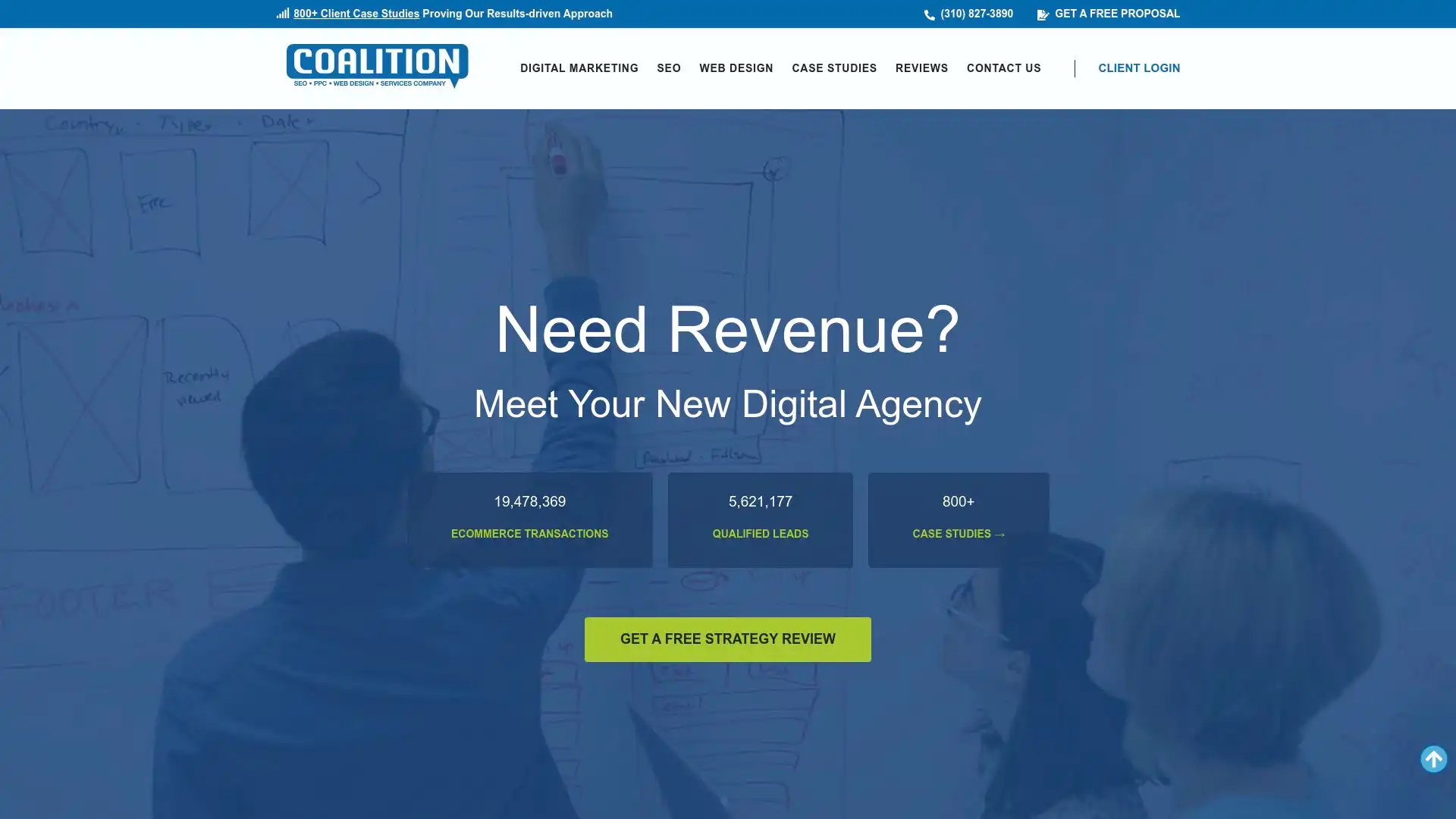
Focus: Organic search and ecommerce growth. Website: coalitiontechnologies.com.
Coalition Technologies has an established focus on SEO and supports other online marketing activities. Its combination of search and commerce experience may appeal to businesses whose revenue depends on product visibility, category pages, and transactional search terms.
For service companies, the questions change. Rather than ecommerce revenue, evaluate lead quality, location relevance, service-page performance, and the ability to produce helpful subject-matter content.
Potential fit: Ecommerce companies and service businesses with complex SEO needs.
What to ask: Ask for case studies from your specific business model, not only impressive traffic figures.
12. Thrive Internet Marketing Agency

Focus: Broad digital marketing and online reputation. Website: thriveagency.com.
Thrive Internet Marketing Agency covers a wide range of channels, including SEO, paid advertising, social media, web design, and reputation-oriented work. Its breadth could be useful for a company seeking a single vendor for several digital projects.
The trade-off is that not every company needs every channel. For a small business, a focused strategy around a few profitable services and geographic markets often makes more sense than spreading a limited budget across many activities.
Potential fit: Companies that want to coordinate search, advertising, websites, and reputation.
What to ask: Ask the agency to rank the proposed services by expected business impact and effort.
13. Elsner Technologies Pvt Ltd

Focus: Ecommerce development, integrations, and acquisition. Website: elsner.com.
Elsner Technologies provides technology-oriented services alongside digital marketing. A business upgrading a Shopify or other ecommerce environment may value the ability to coordinate technical implementation with acquisition improvements.
Before committing, document the relationship between development milestones, content migration, technical SEO, and analytics. Different contractors working independently can create avoidable gaps in responsibility.
Potential fit: Ecommerce merchants planning technical changes and marketing campaigns together.
What to ask: Ask who owns technical SEO acceptance tests before a new store or website goes live.
14. Intero Digital
Focus: Search, paid media, content, and digital PR. Website: interodigital.com.
Intero Digital operates across several growth channels. This can benefit businesses that need search visibility supported by content creation, media exposure, paid traffic, and conversion strategy rather than isolated SEO tasks.
A combined program should still produce a clear breakdown of responsibilities and outcomes. For a B2B client, the priority might be appearing for specialist services and creating qualified opportunities, not producing a large quantity of low-intent content.
Potential fit: Established businesses seeking a coordinated search and digital promotion program.
What to ask: Ask how organic growth, branded search, and lead-quality changes are reported separately.
15. Pearl Lemon
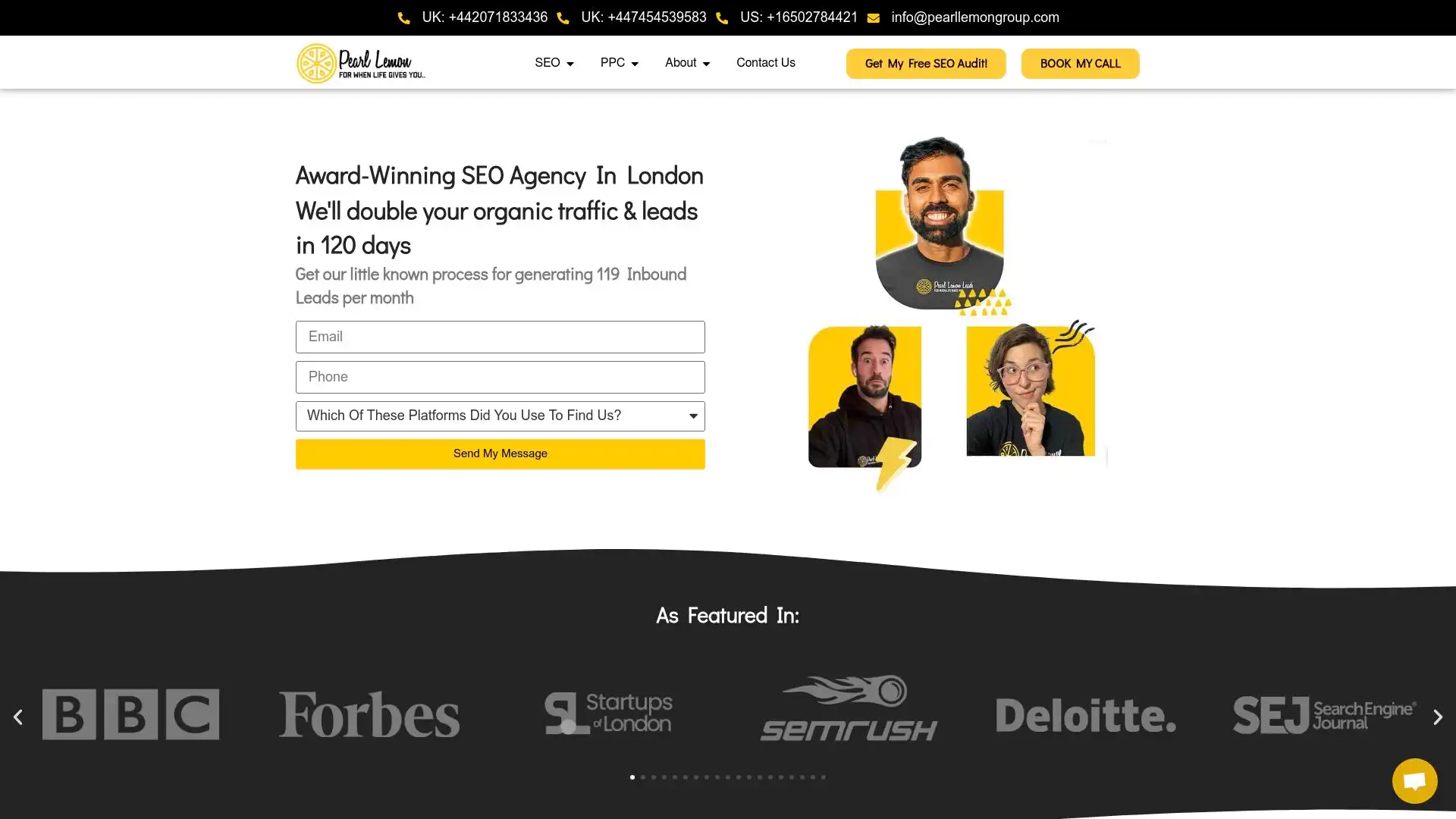
Focus: Search visibility and lead generation. Website: pearllemon.com.
Pearl Lemon is associated with SEO and lead-generation services. Search-focused partners can be attractive for companies that want to improve visibility without immediately hiring a broad creative or media team.
When assessing any ambitious performance claim, request context. Rankings differ by location, competition, existing site authority, and the actual queries tracked. Sustainable business outcomes matter more than a guaranteed traffic number.
Potential fit: Businesses primarily interested in SEO, content, and relevant online visibility.
What to ask: Ask for realistic milestones and how the proposed strategy handles competitive commercial queries.
16. PageTraffic

Focus: SEO programs supported by paid marketing and web work. Website: pagetraffic.com.
PageTraffic has a search-centered service offering that can be relevant to companies entering organic search or improving a long-established website. An organized SEO project typically starts with search demand, site health, and page-level opportunities.
For a niche service provider, volume can be misleading. A small number of qualified searches related to a high-value service may deserve more attention than broad keywords generating visitors who will never become customers.
Potential fit: Companies prioritizing organic visibility in defined services or markets.
What to ask: Ask for a keyword-to-service-page map and the criteria used to prioritize opportunities.
17. iMark Infotech Pvt. Ltd.
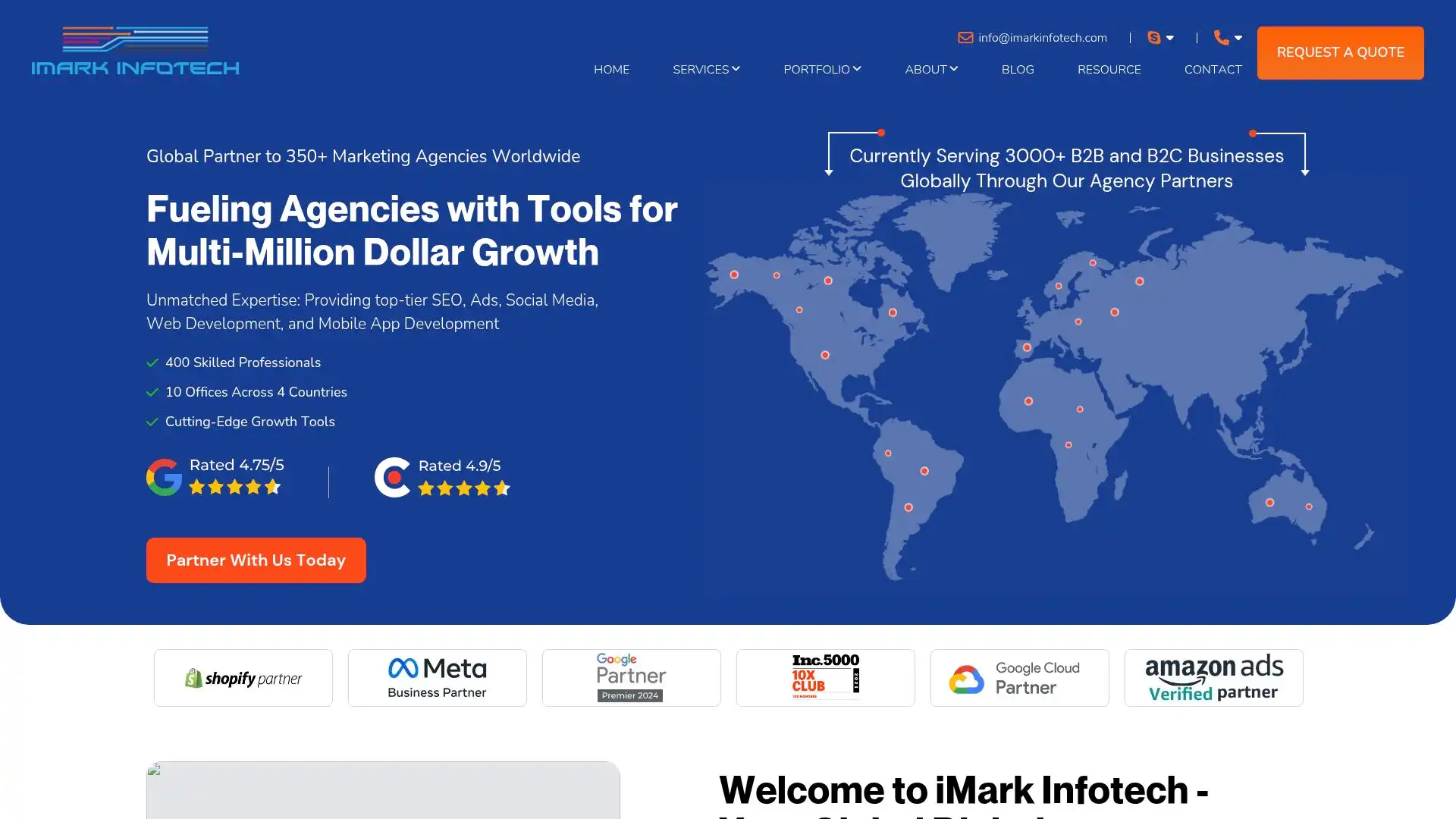
Focus: White-label agency support and multi-service delivery. Website: imarkinfotech.com.
iMark Infotech is a relevant option for agencies exploring outsourced production capacity. White-label SEO or web support can help a client-facing team deliver more consistently when internal specialists are limited.
The quality of a white-label arrangement depends on process discipline. Determine who owns access credentials, approves external communications, checks deliverables, and ensures clients receive accurate reporting.
Potential fit: Agencies and businesses looking for outsourced SEO or development execution.
What to ask: Ask to review sample deliverables, escalation processes, and confidentiality arrangements.
18. WebSpero Solutions
Focus: SEO, advertising, and digital development. Website: webspero.com.
WebSpero Solutions combines digital marketing and development-oriented services. That makes it a candidate for businesses that need technical improvements alongside search and advertising campaigns.
Before comparing proposals, prepare a clear inventory of current website problems, business priorities, and conversion goals. Otherwise, agencies may quote different scopes that are difficult to evaluate side by side.
Potential fit: Businesses needing search campaigns with website implementation support.
What to ask: Ask which improvements the agency can deliver directly and which require third-party developers.
19. Sapphire Software Solutions

Focus: Software development plus online marketing. Website: sapphiresolutions.net.
Sapphire Software Solutions sits closer to a technology and digital services company than a pure SEO boutique. This can be helpful when a business expects software, systems integration, or custom web functionality to be central to its growth plan.
For smaller firms, project governance matters. Define where a development project ends and recurring marketing begins, along with reporting, acceptance criteria, and maintenance responsibilities.
Potential fit: Companies that need web or software delivery alongside digital promotion.
What to ask: Ask for separate implementation and ongoing marketing scopes so deliverables remain clear.
20. Delante

Focus: Search-focused SEO and SEM strategy. Website: delante.co.
Delante specializes in organic and paid search disciplines. A focused search partner can be appropriate for companies that already have a functioning website and want more depth in keyword strategy, technical optimization, and search campaign management.
Specialization has advantages, but the client still needs a way to qualify inquiries and report sales outcomes. Ask how search improvements connect to your CRM and how campaigns adapt when keyword demand or competitive pressure changes.
Potential fit: Businesses seeking a search-specialist partner rather than a full creative agency.
What to ask: Ask for examples involving your language, region, and customer acquisition model.
30 additional digital marketing agencies to research
The remaining companies in the source directory are included for completeness. They are not independently reviewed or recommended here. Visit their sites to confirm the services, geographic coverage, team, and pricing model relevant to your project.
- Absolute Web — absoluteweb.com
- Big Leap — bigleap.com
- Big Red Jelly — bigredjelly.com
- Bird Marketing — bird.marketing
- BrandLume Inc — brandlume.com
- Digital Guider — digitalguider.com
- DiscoverMyBusiness — discovermybusiness.co
- Doctor Multimedia — doctormultimedia.com
- Elit-Web — elit-web.com
- Funnel Boost Media — funnelboostmedia.net
- GCC Marketing — gcc-marketing.com
- Ignite Digital — ignitedigital.com
- Inweb — inweb.ua
- JumpFly, Inc. — jumpfly.com
- Martal Group — martal.ca
- Mavlers — mavlers.com
- MOBIKASA — mobikasa.com
- Netpeak — netpeak.us
- Outerbox — outerboxdesign.com
- Penji — penji.co
- PopArt Studio — popwebdesign.net
- Pronto Marketing — prontomarketing.com
- Red Spot Design — redspotdesign.com
- Saffron Edge — saffronedge.com
- Search Berg — searchberg.com
- Search Bloom — searchbloom.com
- SEO Brand — seobrand.com
- SeoProfy — seoprofy.com
- UAMASTER — uamaster.com
- Widoczni — widoczni.com
How much does a digital marketing agency cost in 2026?
A website redesign, a technical SEO project, and a full-service monthly marketing program are different purchases. The cost of each depends on scope, competition, content requirements, market, technology, and the level of senior expertise involved. Public directory minimums should not be interpreted as guaranteed current quotes.
When requesting estimates, ask providers to separate initial setup, monthly strategy and execution, advertising spend, software subscriptions, and optional production work. Compare what each proposal will actually deliver, not just the total amount in the first month.
A small-business evaluation scorecard
A simple decision framework helps compare proposals without inventing an agency ranking. For each provider, evaluate industry relevance, clarity of deliverables, measurement quality, communication, technical capability, ownership of assets, and cost against the outcomes you need. Record concerns and unanswered questions instead of treating a single marketing metric as proof of quality.
What to look for if you run a construction or industrial business
For companies selling industrial construction, facilities services, machinery, manufacturing capabilities, or commercial remodeling, marketing often needs to support a long and selective buying process. Buyers may investigate vendors over several weeks or months, compare project experience, and involve technical and financial decision-makers.
A useful agency plan should identify high-intent service keywords, publish technically accurate pages, show genuine project evidence, improve visibility in relevant markets, and simplify contact with the appropriate company representative. Online reputation and citations can support credibility, while AI search monitoring may reveal additional discovery opportunities; neither replaces strong service content or sound sales follow-up.
For example, ranking for a broad term like “construction” may attract unrelated visitors. A more specific service page targeting warehouse construction in the relevant region could be more commercially useful, even with lower search demand. The goal is to attract people who are evaluating suppliers—not merely increase a graph in a monthly report.
How SEO, paid ads, content, and outbound can work together
SEO helps a business become discoverable during research. Paid search may create additional exposure for important commercial queries. Content marketing explains capabilities and answers buyer questions. Outreach can help open conversations with a defined group of target accounts. Analytics and CRM feedback connect these activities to qualified inquiries and business outcomes.
A company does not need to launch every channel at once. In many cases, improving one priority service page, fixing tracking, and creating a clearer offer will generate better learning than starting five disconnected campaigns.
Questions to ask before signing a marketing agency agreement
- Which three service or product categories would you prioritize in the first 90 days?
- What will your team deliver during the first month, and what will depend on our internal staff?
- How will you distinguish a genuine sales opportunity from an unqualified contact?
- Will we own our website, Google Analytics, Search Console, CRM data, and advertising accounts?
- What reporting and meeting schedule will we receive?
- Which work is done in-house and which is subcontracted?
- How do you approach AI search visibility without promising guaranteed mentions?
- What happens to our content and assets if we stop working together?
Frequently asked questions about small-business marketing agencies
How do I choose the best digital marketing agency for my small business?
Define a business outcome, shortlist agencies with relevant sector experience, compare their deliverables, and ask how results will be measured. The agency with the largest team or highest directory score is not always the right fit.
Is SEO or Google Ads better for a small business?
SEO can build durable organic visibility, while paid search can provide quicker exposure when campaigns are properly funded and managed. The appropriate balance depends on competition, demand, budget, and your sales cycle.
Should a small business hire a full-service agency or a specialist?
A specialist can be a strong choice when one channel is the clear priority. A full-service agency may be useful when several channels and a website project need coordination. Ask for the actual assigned team and specific deliverables.
Can an agency guarantee first-page Google rankings?
No credible agency can guarantee a particular organic ranking. Outcomes depend on search algorithms, competition, the current site, and many other factors.
What metrics matter most for B2B marketing?
Useful indicators include qualified inquiries, relevant search visibility, landing-page conversions, booked meetings, accepted sales opportunities, and revenue that can be reasonably attributed to marketing.
How long does SEO take to work?
Some technical and on-page improvements may show early signs within weeks, while competitive organic growth typically requires sustained work. Exact timelines vary and should not be guaranteed.
Does appearing in AI search matter for small businesses?
It can matter when buyers use AI tools to compare suppliers or research services. Agencies should treat AI visibility as an additional discovery channel and measure it carefully rather than promising fixed recommendations.
How much should I budget for an agency?
Start from the scope and expected commercial value. Separate retainers from advertising spend, setup fees, software, and production costs. Request a written breakdown and measurable milestones.
Why Velautec Media focuses on qualified growth
At Velautec Media, our approach is designed around a practical idea: useful marketing should help the right companies discover your business and give them a reason to start a conversation. We specialize in SEO, AI visibility, website and landing-page improvements, content, online reputation, and B2B-oriented growth for businesses in construction, industrial services, and related sectors.
We connect search strategy with the commercial realities of long buying cycles, specialized services, and valuable projects. That includes building relevant service pages, identifying opportunities in search results, clarifying offers, and measuring meaningful contact actions when suitable data is available.
If your business sells high-value services, the objective is not to attract every visitor. It is to be discoverable and credible when the right buyer is researching a solution.
Want a marketing plan built around your services and target market? Explore Velautec Media to discuss organic search, AI discovery, content, and qualified lead generation.
Editorial note: This is a research-oriented directory, not a verified ranking or an endorsement of every listed agency. Service offerings, prices, customer reviews, and company details may change. Examples in this guide are illustrative; individual marketing results vary.
