



A reliable link-building strategy for growing businesses begins with a simple question: where would the right customers expect to encounter your company? For a construction contractor, that might be a trade publication or local industry association. For an industrial manufacturer, it could be a technical resource, partner profile, or specialized business directory.
Backlinks are one part of how websites gain visibility, but collecting large numbers of links is not the objective. A mention on a credible, relevant page can introduce your business to prospective buyers, strengthen brand recognition, and make your expertise easier to discover. No individual link guarantees higher rankings.
In this Velautec Media guide, we examine 14 link-building tools for 2026, organized around the practical stages of a campaign: competitive research, discovering publishers, finding contacts, conducting thoughtful outreach, and monitoring results. The emphasis is on legitimate editorial coverage and commercial relevance—not mass-produced links.
Author: Luis Chávez | Updated: October 2026 | Audience: B2B, industrial, construction, local-service and SEO teams.
What is a link-building tool?
A link-building tool is software that assists with one or more tasks related to earning, assessing, or managing references from external websites. One platform might reveal which publications link to competitors; another might find an editor’s professional email address; a third may track whether a previously earned mention is still live.
These products are not all interchangeable. A backlink database does not write good stories, an outreach CRM does not assess technical SEO, and an email finder does not establish that a publisher will want your content. The most effective workflow combines the right software with human judgment, useful information, and respectful relationships.
The best link-building tools at a glance
- Ahrefs — competitor backlink analysis and opportunity discovery.
- Semrush — combining backlink analysis, prospect research, and campaign tracking.
- Skrapp — finding professional contacts for personalized outreach.
- Majestic — studying backlink profiles and link-network context.
- BuzzSumo — finding content and topics that attract editorial attention.
- SE Ranking — managing backlink monitoring across several websites.
- WhitePress — exploring sponsored editorial distribution in different countries.
- Mangools LinkMiner — accessible backlink research for smaller businesses.
- Screaming Frog SEO Spider — technical link auditing and broken-link identification.
- Linkody — monitoring earned backlinks and detecting changes.
- Pitchbox — managing larger outreach programs with defined processes.
- Respona — combining prospect research with contextual pitches.
- BuzzStream — managing relationships and avoiding duplicate outreach.
- Hunter — finding and verifying relevant business email addresses.
How Velautec evaluates backlink opportunities
For high-value service businesses, a useful backlink is not simply one that comes from a domain with a high third-party score. It should be relevant to the company’s expertise and have a plausible reason to exist for readers.
- Audience fit: Does the referring site reach customers, specifiers, procurement teams, journalists, or industry partners?
- Editorial context: Is the article written for people, or does it appear to exist mainly to sell links?
- Geographic fit: Does the publisher operate in an actual market the business serves?
- Destination quality: Does the linked page clearly answer the reader’s question and make the next step easy?
- Transparency: Are paid relationships disclosed and qualifying link attributes used where required?
- Business signal: Could the mention create useful referral traffic, brand searches, enquiries or relationships even without a ranking benefit?
We also distinguish earned links—created because the publisher finds something worth referencing—from advertising placements. Both can have a business purpose, but paying for links to manipulate search rankings is a different activity and carries policy risks.
14 best link-building tools in 2026
1. Ahrefs
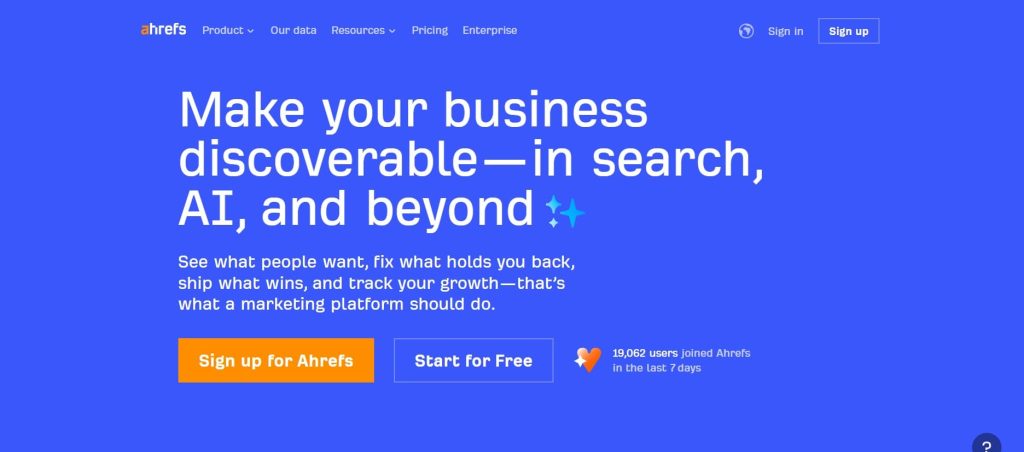
Best for: Competitor backlink analysis and opportunity discovery. Pricing: Premium subscription; confirm current limits and plans with the vendor. Website: Ahrefs.
What it contributes: Backlink Gap and Site Explorer support detailed competitor research.
Example for a B2B or service business: For an industrial contractor, inspect the industry publishers, regional associations, project directories, and supplier pages that link to comparable companies. Classify prospects by relevance and editorial credibility before contacting anyone.
What to watch out for: Its volume of data can distract teams that have not defined what a qualified prospect looks like.
Velautec recommendation: Build a shortlist of ten referring sites that cover your actual industry, then verify whether each publication accepts useful expert contributions.
2. Semrush
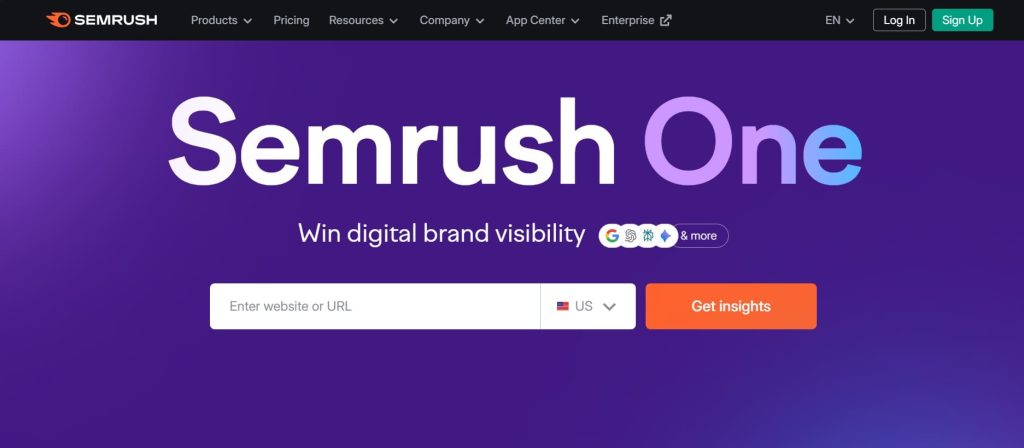
Best for: Combining backlink analysis, prospect research, and campaign tracking. Pricing: Premium subscription; confirm current limits and plans with the vendor. Website: Semrush.
What it contributes: Integrated backlink analytics, Backlink Gap, and link-building workflows can reduce switching between separate tools.
Example for a B2B or service business: A B2B manufacturer can compare the referring domains of three competitors, separate news coverage from low-value directories, and organize legitimate editorial pitches in one workflow.
What to watch out for: Suggested prospects and authority metrics still need manual review for relevance and legitimacy.
Velautec recommendation: Compare referring domains for direct business competitors, not only websites ranking for informational blog keywords.
3. Skrapp

Best for: Finding professional contacts for personalized outreach. Pricing: Limited free credits and paid plans; confirm current limits and plans with the vendor. Website: Skrapp.
What it contributes: Domain search, contact discovery and verification help teams reach editors and publication contacts efficiently.
Example for a B2B or service business: After locating an appropriate industry publication, look for its publicly listed editor or partnership contact. Use one genuinely relevant pitch rather than a mass-generated exchange request.
What to watch out for: An identified address is not proof the recipient wants an unsolicited pitch; verify role, relevance, and applicable outreach rules.
Velautec recommendation: Create one accurate prospect record per organization, including reason for contacting, contact source, and follow-up status.
4. Majestic

Best for: Studying backlink profiles and link-network context. Pricing: Paid plans; confirm current limits and plans with the vendor. Website: Majestic.
What it contributes: Its link graph and metrics such as Trust Flow and Citation Flow provide additional context for referring domains.
Example for a B2B or service business: When reviewing an unfamiliar regional publication, examine what kinds of websites link to it and what topics define its network before including it in a digital PR campaign.
What to watch out for: Proprietary scores are not Google ranking factors and should not replace human quality assessment.
Velautec recommendation: Look at topical relevance and the quality of the linking neighborhood; do not select placements solely because a metric is high.
5. BuzzSumo

Best for: Finding content and topics that attract editorial attention. Pricing: Paid subscription; confirm current limits and plans with the vendor. Website: BuzzSumo.
What it contributes: Content discovery helps identify topics, formats and publishers that may respond to original data or expert commentary.
Example for a B2B or service business: A company specializing in industrial warehouses could publish useful research on facility planning, storage trends, or construction timelines, then approach publications that already cover those subjects.
What to watch out for: High social engagement does not automatically mean an article will earn links or attract business leads.
Velautec recommendation: Identify one data-driven article your organization can uniquely contribute before beginning outreach.
6. SE Ranking
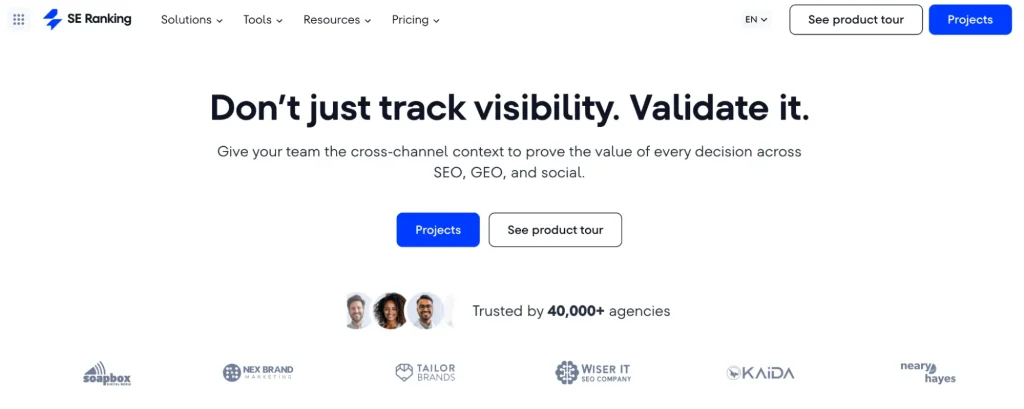
Best for: Managing backlink monitoring across several websites. Pricing: Paid plans; confirm current limits and plans with the vendor. Website: SE Ranking.
What it contributes: Combines backlink checks, SEO research, and ranking reports in one environment.
Example for a B2B or service business: An agency serving contractors in Lima and the United States can track new and lost referring domains alongside relevant service-page visibility without merging unrelated client reports.
What to watch out for: Backlink updates and keyword changes do not prove that a particular placement caused a ranking movement.
Velautec recommendation: Report only placements that are live, relevant, and tied to a defined campaign objective.
7. WhitePress
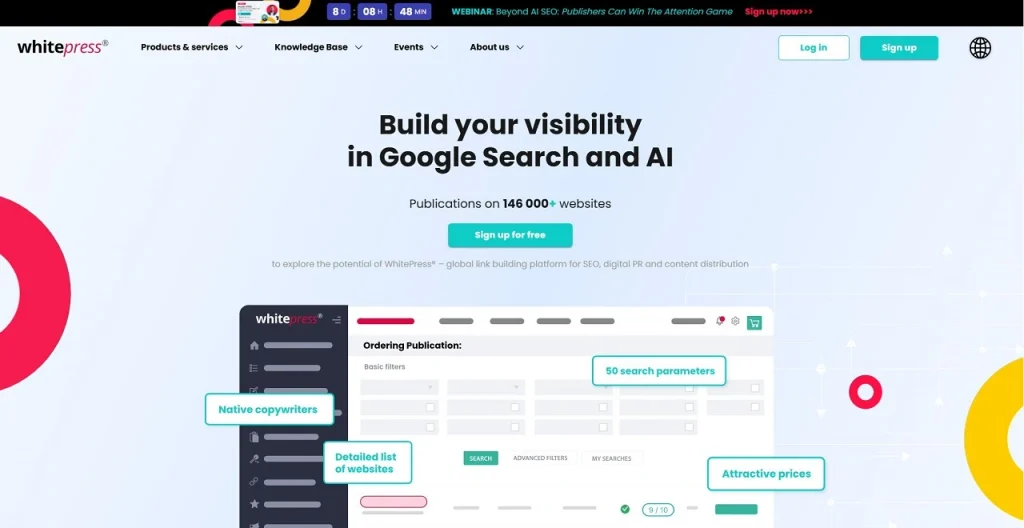
Best for: Exploring sponsored editorial distribution in different countries. Pricing: Marketplace; placement costs vary; confirm current limits and plans with the vendor. Website: WhitePress.
What it contributes: Publisher discovery and geographic or language filters can simplify sponsored content planning.
Example for a B2B or service business: A company expanding into another market may consider clearly disclosed sponsored articles for brand awareness, referrals, or audience exposure, not as a shortcut to manipulate organic rankings.
What to watch out for: Paying for placements intended to pass ranking credit can violate Google Search spam policies. Sponsored links should be properly qualified.
Velautec recommendation: Before commissioning a paid placement, confirm the publisher’s audience, editorial standards, disclosure requirements, and rel="sponsored" link treatment.
8. Mangools LinkMiner

Best for: Accessible backlink research for smaller businesses. Pricing: Paid plans, generally lower-cost than enterprise suites; confirm current limits and plans with the vendor. Website: Mangools LinkMiner.
What it contributes: The streamlined workflow makes basic referring-page review easier for smaller teams.
Example for a B2B or service business: A local remodeling company can examine where competitors earn local mentions and prioritize trade associations, local news, and authentic suppliers over random directories.
What to watch out for: Coverage and advanced workflows may be more limited than specialist enterprise tools.
Velautec recommendation: Start with five competitor domains and document only opportunities that could also send relevant visitors.
9. Screaming Frog SEO Spider

Best for: Technical link auditing and broken-link identification. Pricing: Free limited crawl and paid license; confirm current limits and plans with the vendor. Website: Screaming Frog SEO Spider.
What it contributes: Crawls internal links, redirects, canonical tags and error pages, exposing issues that affect user navigation and crawlability.
Example for a B2B or service business: Before directing publicity to a new service page, verify that the page returns a successful response, is internally linked, and does not accidentally canonicalize to a different URL.
What to watch out for: It is a technical crawler, not a contact finder or external-link acquisition platform.
Velautec recommendation: Audit the pages you want publishers to reference, plus any legacy URLs that have valuable external links.
10. Linkody

Best for: Monitoring earned backlinks and detecting changes. Pricing: Paid plans; confirm current limits and plans with the vendor. Website: Linkody.
What it contributes: Link monitoring and alerts help identify lost placements and changes to link attributes.
Example for a B2B or service business: A construction company featured in a relevant trade publication can monitor whether the mention remains live and whether the destination page still works.
What to watch out for: Monitoring a link is not the same as measuring traffic quality, lead conversions, or business results.
Velautec recommendation: Review lost links for legitimate repair opportunities rather than automatically requesting every link be reinstated.
11. Pitchbox

Best for: Managing larger outreach programs with defined processes. Pricing: Enterprise-oriented pricing; confirm current limits and plans with the vendor. Website: Pitchbox.
What it contributes: Campaign sequences, contact records, and team coordination can support complex digital PR operations.
Example for a B2B or service business: For a large B2B program, separate journalist requests, resource-page outreach, trade association opportunities, and expert contributions into distinct, carefully reviewed campaigns.
What to watch out for: Automation can amplify poor targeting and repetitive emails if editorial quality checks are missing.
Velautec recommendation: Require manual approval for the first pitch in each campaign and suppress people who opt out.
12. Respona
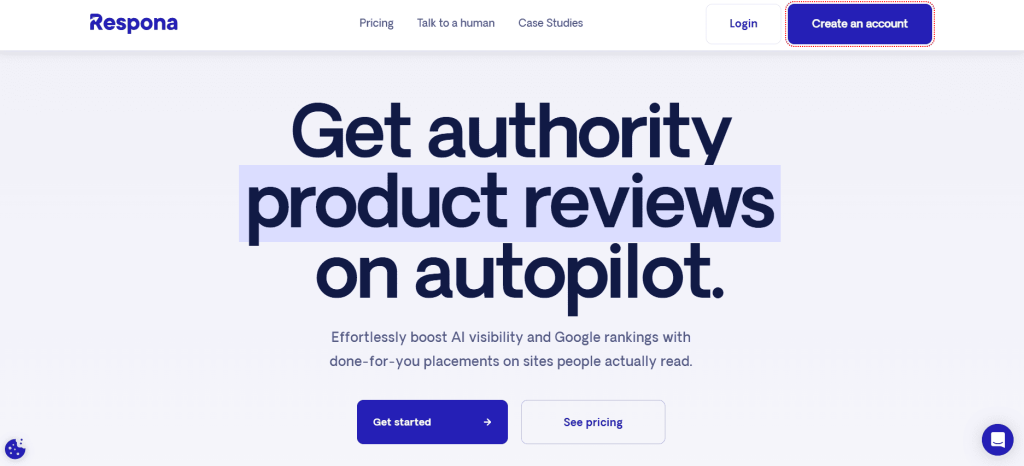
Best for: Combining prospect research with contextual pitches. Pricing: Paid plans; confirm current limits and plans with the vendor. Website: Respona.
What it contributes: Content-oriented prospecting and personalization workflows can help organize targeted outreach.
Example for a B2B or service business: An industrial equipment supplier can reference a specific existing article and offer a genuinely useful specification guide, expert comment, or original data point.
What to watch out for: AI-written personalization may be superficial or inaccurate; review it against the publication’s actual content.
Velautec recommendation: Include one precise reason the resource would improve the editor’s article; avoid generic praise.
13. BuzzStream
Best for: Managing relationships and avoiding duplicate outreach. Pricing: Paid subscription; confirm current limits and plans with the vendor. Website: BuzzStream.
What it contributes: Contact histories, prospect lists, follow-ups and teamwork features improve coordination.
Example for a B2B or service business: When multiple staff members contact construction-industry editors, BuzzStream can preserve relationship context so prospects do not receive overlapping messages.
What to watch out for: An outreach CRM cannot make a weak story newsworthy or a low-quality link valuable.
Velautec recommendation: Treat each publisher as a long-term relationship, with documented responses and clear consent preferences.
14. Hunter

Best for: Finding and verifying relevant business email addresses. Pricing: Free allowance and paid plans; confirm current limits and plans with the vendor. Website: Hunter.
What it contributes: Domain Search and Email Verifier support contact research and bounce reduction.
Example for a B2B or service business: After manually identifying a legitimate publication, identify its public communications contact and verify a suitable professional address before sending a tailored pitch.
What to watch out for: Verification indicates deliverability likelihood, not permission, interest or the accuracy of a person’s editorial role.
Velautec recommendation: Prefer official editorial contacts and comply with privacy, anti-spam, and opt-out requirements.
How to build a practical link-building workflow without wasting time
The biggest mistake is purchasing an outreach platform before identifying a reason anyone should link to you. A successful program starts with a useful resource or story, then works backward to the relevant audience and publishers.
Step 1: Choose a page worth referencing
Select a helpful, accurate resource that supports your business: an industrial design checklist, a warehouse-planning guide, an original market observation, a practical specification resource, or a case study whose claims and permissions you can substantiate. Make sure the page works well on mobile and explains what the reader can do next.
Step 2: Find prospects with genuine topical relevance
Use a tool such as Ahrefs, Semrush, Majestic or LinkMiner to study competitor coverage. Add manual searches for industry associations, legitimate chambers of commerce, local business publishers, and relevant supplier partnerships. Avoid assuming that every site linking to competitors should link to you.
Step 3: Confirm the editorial contact
Review the website’s contact or editorial pages first. If needed, Skrapp or Hunter can support research into professional contacts, but verify their roles and respect applicable privacy rules. A good prospecting sheet can remain simple: website, editor or contact, reason for fit, pitch angle, contact channel, and status.
Step 4: Make a helpful pitch
Explain the concrete benefit for the editor’s readers in a few sentences. Offer original information or a qualified expert point of view. Do not require an exact-match anchor text or demand that an editorial mention be dofollow. If a publisher declines, respect the response.
Step 5: Monitor outcomes that matter
Check whether the mention was published and whether readers can reach the destination page. Then look at referral visits, relevant branded searches, qualified enquiries and the broader SEO trend. A backlink report should never imply that every ranking movement came from a newly earned mention.
A campaign with five relevant industry mentions can be more commercially useful than one with hundreds of unrelated links. Evaluate the audience and the opportunity, not just the count.
Which tools should your business choose?
If you are a local contractor or small service business
Start with free website and analytics data, a small amount of manual competitor research, and focused outreach to legitimate local organizations. If you need a paid backlink tool, choose one research platform rather than stacking subscriptions. Prioritize local reputation, accurate listings and useful pages before scaling outreach.
If you run a specialized B2B or industrial company
Combine competitor research with a carefully curated list of trade publications, technical publishers, supplier networks, and industry events. Original technical insights and project expertise are more persuasive than generic link requests. Consider an email verification tool only when contact discovery becomes a recurring bottleneck.
If you manage several SEO clients
A combination such as Semrush or Ahrefs for discovery, BuzzStream or Respona for campaign management, and Linkody or an existing SEO suite for monitoring can be practical. Pitchbox is worth considering when a large team needs enterprise controls. Keep separate records, prevent duplicate outreach and review the quality of every placement.
Can buying backlinks hurt your SEO?
Yes. Google identifies buying or selling links for the purpose of manipulating rankings as link spam. Paid editorial content and sponsorships can still be legitimate marketing activities, but the link relationship should be appropriately qualified, typically with rel="sponsored" or rel="nofollow". Advertising should not be confused with naturally earned editorial endorsements.
This distinction matters with marketplaces such as WhitePress. Evaluate paid opportunities for real audience exposure and referral value; do not assume a purchased placement creates legitimate ranking authority. For guidance, see Google Search spam policies and Google’s outbound link qualification documentation.
How do backlinks fit into AI search visibility?
AI-assisted discovery adds another reason to build a credible public presence. When a brand is accurately described in reputable industry resources, potential customers may encounter it through multiple research channels. However, external links and brand mentions do not guarantee inclusion in ChatGPT, Gemini, Google AI Overviews or any other AI-generated answer.
For Velautec’s B2B focus, it is more useful to build a consistent profile of services, geographic markets, verified project experience, and accessible technical expertise than to pursue links that have no relationship to the business. Treat AI visibility as a separate measurement challenge, not as a promised result of every backlink.
Frequently asked questions
What is the best backlink analysis tool in 2026?
Ahrefs and Semrush are both strong broad research platforms. Majestic is useful for specialized link-graph analysis, while Mangools LinkMiner may suit a smaller budget. The best fit depends on what you need to research and monitor.
What is the best link-building software for outreach?
BuzzStream is oriented around relationship and team management, Respona around contextual outreach workflows, and Pitchbox around larger-scale campaigns. Software cannot replace a useful pitch and real publisher interest.
Are backlinks still important for SEO?
Links remain one of many signals that can help search systems understand the web. Relevance, content quality, search intent, technical accessibility and site reputation also matter. Links do not guarantee rankings.
How can a construction company earn backlinks?
Examples include genuine trade-association memberships, useful project insights, supplier and partner mentions, original industry research, relevant local news, and expert commentary. Avoid low-quality directories and forced reciprocal linking.
Can I build backlinks without Ahrefs or Semrush?
Yes. Search for relevant industry publications manually, inspect competitor mentions, maintain a contact spreadsheet and monitor results with the tools you already have. Premium products generally improve workflow efficiency, not the underlying editorial value.
How many backlinks does a new business website need?
There is no universal number. Start by improving key service pages and earning genuine references from organizations that matter in your market. Link relevance and quality are more meaningful than arbitrary numerical targets.
Should businesses disavow every spammy backlink?
No. A large number of suspicious links in a tool report does not automatically mean a disavow file is necessary. Google recommends disavow primarily when there is a substantial number of spammy, artificial or low-quality links that caused, or are likely to cause, a manual action.
Can paid guest posts be safe?
Sponsored articles can be used legitimately for advertising or referral exposure. Paid links should be disclosed and qualified appropriately rather than sold as a way to transfer ranking credit.
Final thoughts: better links, better business opportunities
Good link building is not about collecting URLs. It is about demonstrating expertise in places where the right audience already pays attention. Research software helps discover relevant publishers; outreach tools help organize conversations; monitoring tools help verify what happened. The strategy connects those actions to credibility and commercial opportunity.
Velautec Media helps construction, industrial, and B2B service companies improve their visibility through technical SEO, useful content, digital reputation, and search-focused lead generation. If your website is getting overlooked in important buyer searches, explore Velautec’s SEO and digital growth services.
Editorial note: Product capabilities and prices can change. This guide compares documented tool functions and practical use cases; it does not claim that Velautec independently tested every product or guarantees links, rankings, AI recommendations, or leads.
