


19 Best AI Visibility Tools for Marketing Agencies in 2027
AI search is changing how buyers discover brands. For marketing agencies, the challenge is bigger than checking whether a client appears in one ChatGPT answer: you need repeatable monitoring, competitive context, source analysis, implementable recommendations and reporting that connects the work to business outcomes.
This Velautec guide compares 18 platforms covered in our reference research and adds Fardo as our Editor’s Choice for Latin America. The goal is to help agencies find the right workflow for their client mix—not to claim that one product wins every situation.
How we selected the tools: We reviewed the supplied 2026 comparison and publicly available product information, organizing the shortlist by agency suitability, scope and practical considerations. This is an editorial overview, not a hands-on benchmark of every paid platform. Features and terms may change.
Editor’s Choice: Fardo — AI Brand Visibility with a LATAM Focus
Best for: Latin American brands and agencies that want to understand how AI assistants describe, cite and recommend a company in a regionally relevant context.
Fardo focuses on the emerging discipline of AI brand visibility, with a particular emphasis on Latin America. Its website describes auditing brand presence in ChatGPT, Gemini, Perplexity and Claude, identifying competing brands and cited sources, and turning those observations into a practical optimization roadmap.
That regional angle is the main reason for our editorial selection. An agency serving Spanish-speaking markets needs to test prompts in the language and buying context of its customers; a generic global visibility score does not always answer those questions. Fardo positions itself as a platform focused on that need.
- Where it stands out: LATAM-oriented brand intelligence and AI visibility analysis.
- Agency relevance: The company offers a dedicated agency-facing proposition for evaluating client visibility and opportunities.
- What to check: Confirm supported countries, AI engines, monitoring frequency, export options and current commercial terms directly with Fardo.
Official website: heyfardo.com · For agencies: Fardo’s agency solution.
Editor’s Choice is an expert selection for the LATAM use case, we tested every product in our reviews.
AI Visibility Tools for Agencies: Quick Comparison
| Platform | Best suited to | Primary focus |
|---|---|---|
| Fardo | LATAM brands and agencies | AI brand visibility and regional positioning |
| Profound | Enterprise AEO programmes and agencies with multiple client accounts | AI-search measurement, agency operations, enterprise reporting |
| Scrunch | Agencies focused on monitoring, crawler experience and partnerships | Brand monitoring, AI crawler experience, partner ecosystem |
| Otterly | Small agencies starting AI visibility reporting | Entry-level GEO reporting, brand mentions, share of voice |
| AthenaHQ | Teams wanting monitoring plus a prioritized action list | AI visibility diagnostics, action recommendations, prospect reporting |
| Rankability | SEO agencies adding AI visibility to existing workflows | SEO workflows, content briefs, client-ready reporting |
| Peec AI | Agencies prioritizing clear dashboards and trend tracking | AI answer monitoring, visibility trends, client dashboards |
| Semrush | Agencies already invested in Semrush SEO tools | SEO and AI research, competitor analysis, consolidated workflows |
| Ahrefs | SEO-first teams expanding into AI search | Brand Radar, SEO research, competitive intelligence |
| AirOps | Technical content teams running repeatable optimization projects | Content operations, workflow automation, scaled page refreshes |
| Writesonic | Agencies whose main priority is faster content drafting | AI-assisted content creation, SEO writing, editorial throughput |
| Conductor | Enterprise agencies with mature SEO operations | Enterprise SEO, cross-market reporting, operational oversight |
| BrightEdge | Large brands working on entities and search relevance | Entity-led content, enterprise optimization, SEO analytics |
| Bluefish | Brand and communications teams monitoring AI narratives | Brand perception, reputation analysis, AI answer monitoring |
| Evertune | Teams tracking how AI describes brands and categories | Brand intelligence, sentiment, AI category analysis |
| Adobe LLM Optimizer | Enterprise clients with an existing Adobe ecosystem | Adobe ecosystem integration, enterprise attribution, optimization opportunities |
| SE Visible | Cost-conscious agencies seeking standalone AI visibility | Brand mention monitoring, entry-level AI reporting, multi-brand reviews |
| AIclicks | Agencies exploring AI visibility with content and outreach workflows | AI discoverability, content recommendations, outreach ideas |
| Brandlight | Enterprise teams examining the sources behind AI responses | Source attribution, earned-media intelligence, brand monitoring |
What Agencies Should Look for in AI Visibility Software
- Per-client reporting: Separate projects, comparable time periods and exportable views.
- Prompt and geographic context: Support for the actual languages, countries and topics your clients care about.
- Answer-engine coverage: Check ChatGPT, Gemini, Perplexity, Google AI surfaces and other engines relevant to buyers.
- Source-level analysis: Distinguish brand mentions from genuine source citations.
- Actionability: A useful tool should help your team decide what to update, publish or verify next.
- Commercial outcomes: Combine visibility trends with GA4, CRM and qualified-lead signals instead of promising direct attribution from mentions alone.
The 18 Additional AI Visibility Tools Reviewed
1. Profound
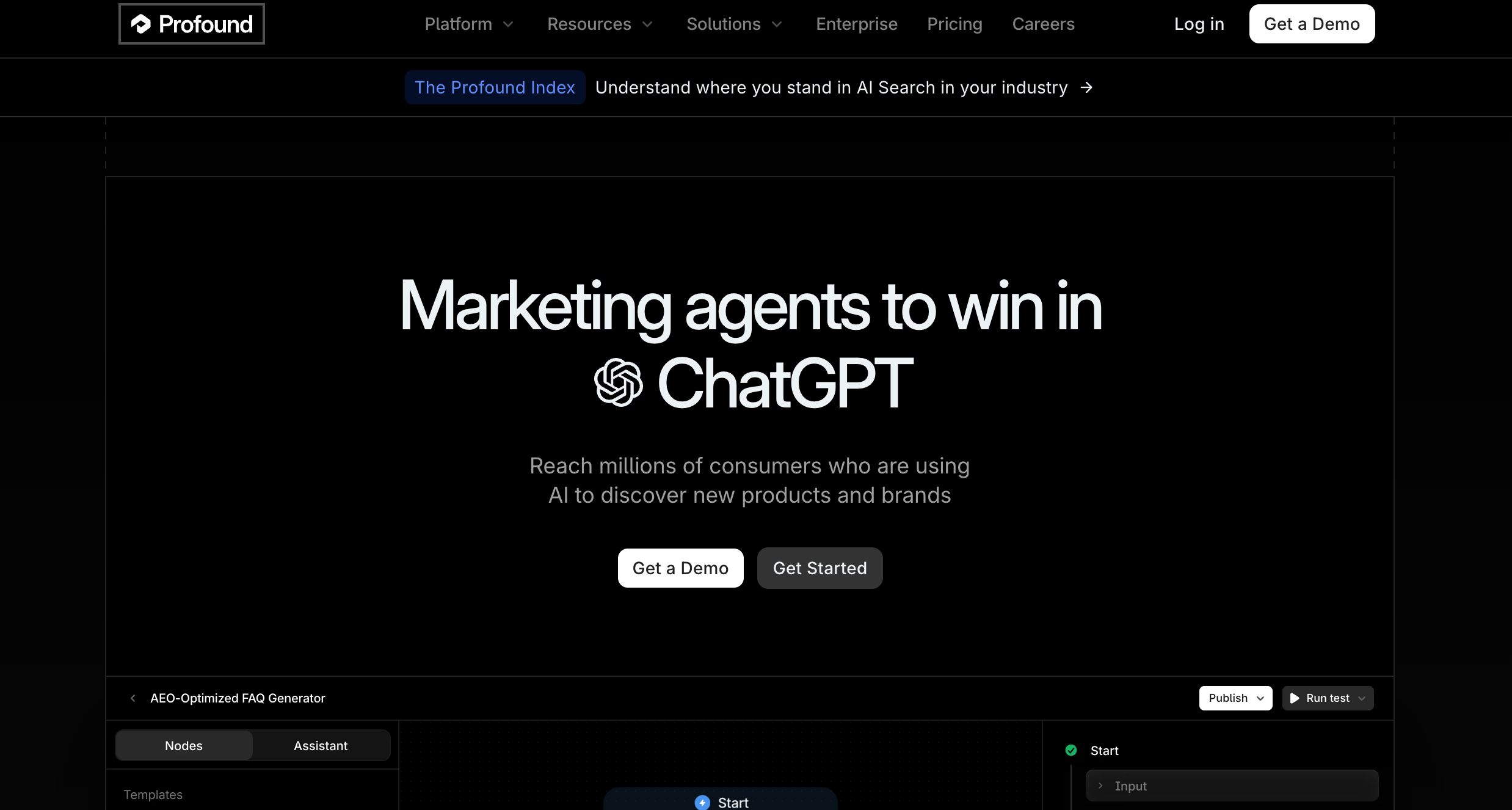
Best for: Enterprise AEO programmes and agencies with multiple client accounts.
Monitoring, competitive AI-answer analysis, prospect workspaces and content workflows are brought together in a broader marketing platform. Its agency-oriented setup can suit teams offering ongoing AI visibility as a managed service.
Key strengths: AI-search measurement, agency operations, enterprise reporting.
Consider before choosing: Its breadth can be unnecessary for a small agency that simply wants to check a handful of prompts. Assess onboarding, reporting permissions and cost before committing.
2. Scrunch
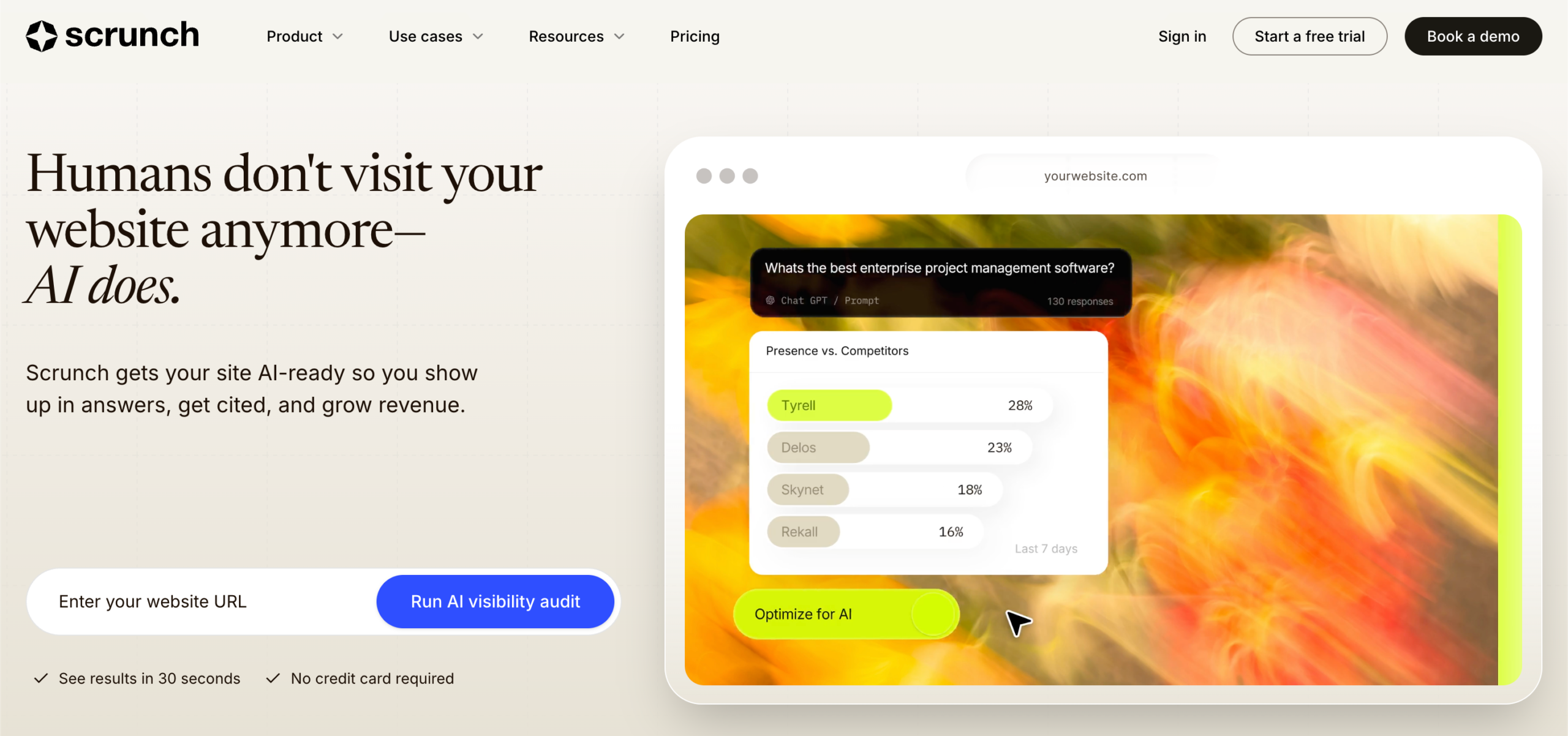
Best for: Agencies focused on monitoring, crawler experience and partnerships.
Combines brand appearance monitoring with a dedicated approach to making website content accessible to AI crawlers. Its partnership proposition is worth reviewing for firms that want shared marketing or referral opportunities.
Key strengths: Brand monitoring, AI crawler experience, partner ecosystem.
Consider before choosing: Teams expecting a complete content-production system will still need publishing and editing tools. Check which regions and engines are available in the selected plan.
3. Otterly
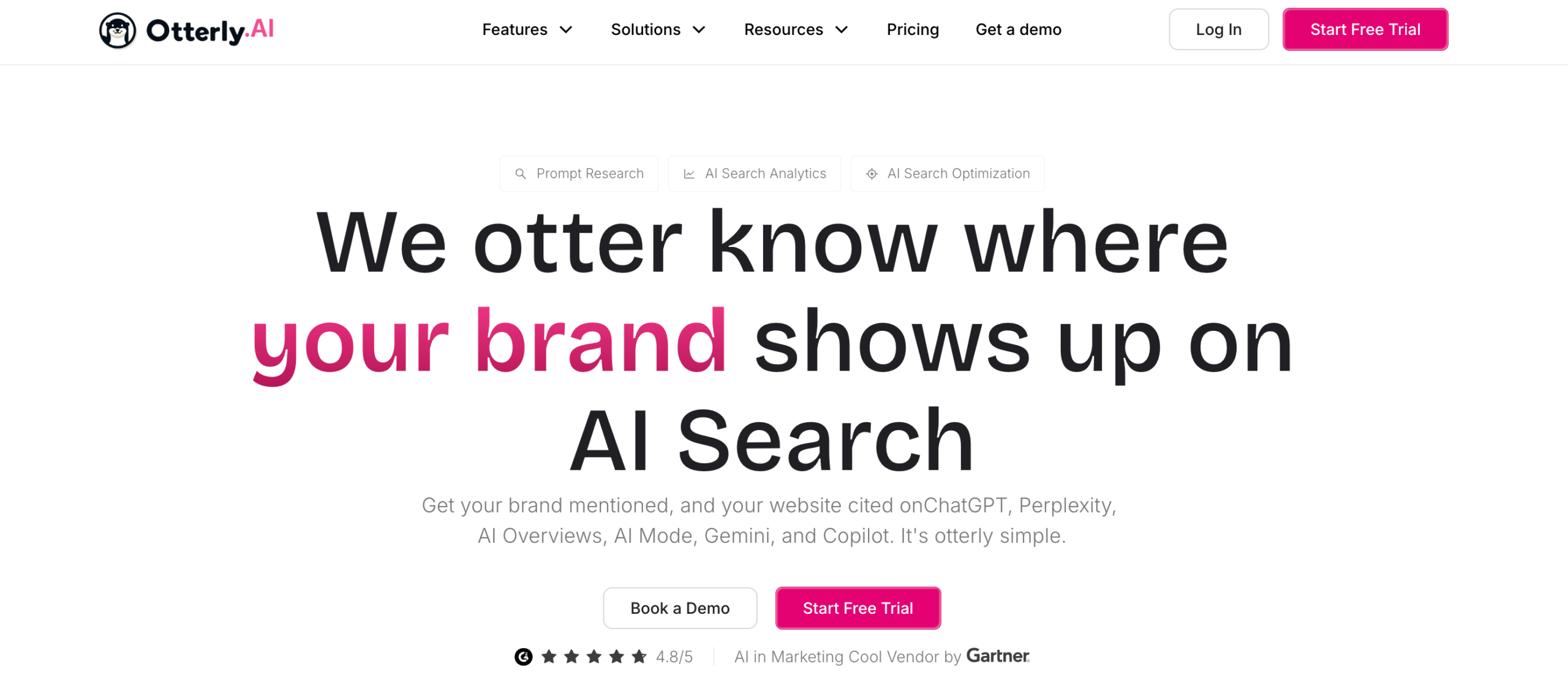
Best for: Small agencies starting AI visibility reporting.
A relatively accessible way to follow brand mentions in AI answers and surface potential citation sources. A straightforward dashboard makes it useful for pilots and introductory client reports.
Key strengths: Entry-level GEO reporting, brand mentions, share of voice.
Consider before choosing: It is primarily a monitoring product. Content production, final editorial decisions and commercial attribution remain separate tasks.
4. AthenaHQ
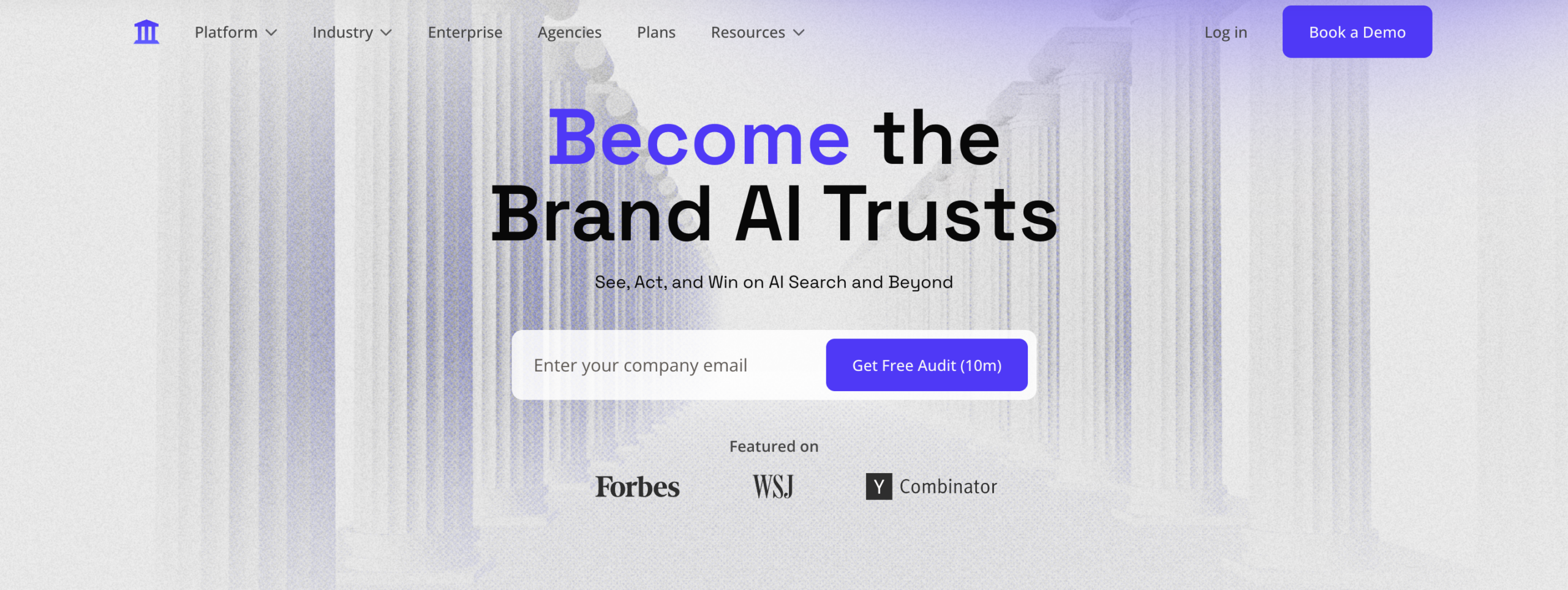
Best for: Teams wanting monitoring plus a prioritized action list.
Focuses on turning AI visibility observations into clearer recommendations, which can reduce the time between presenting a report and proposing specific website improvements.
Key strengths: AI visibility diagnostics, action recommendations, prospect reporting.
Consider before choosing: Recommendations should be manually reviewed. Confirm prompt allowances, market targeting and the reliability of any estimated demand figures.
5. Rankability
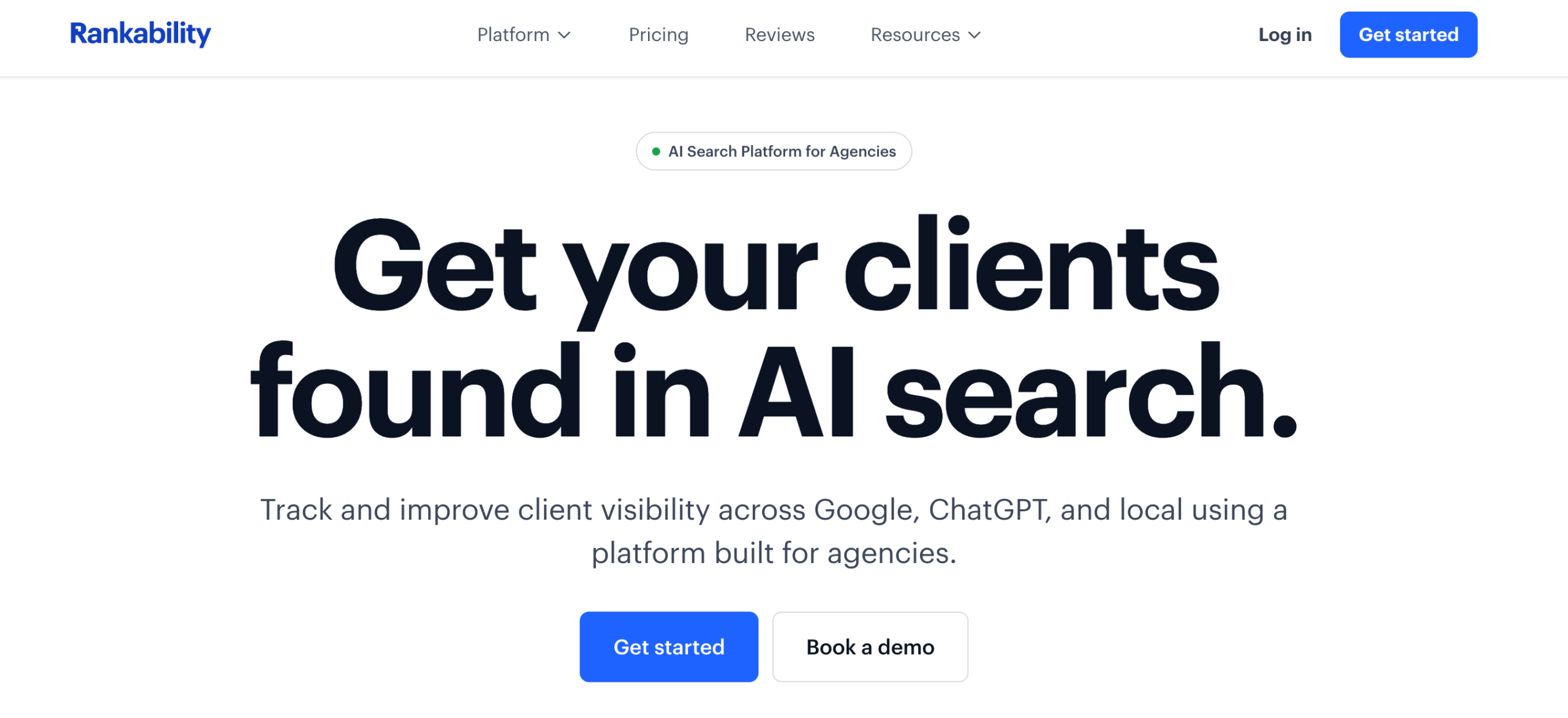
Best for: SEO agencies adding AI visibility to existing workflows.
Puts content planning and traditional organic-search activities closer to AI mention tracking. That can be efficient for teams which already sell technical SEO and content services.
Key strengths: SEO workflows, content briefs, client-ready reporting.
Consider before choosing: Its approach to query tracking may reflect configured topics rather than the full population of user conversations. Validate each metric before reporting it as market demand.
6. Peec AI
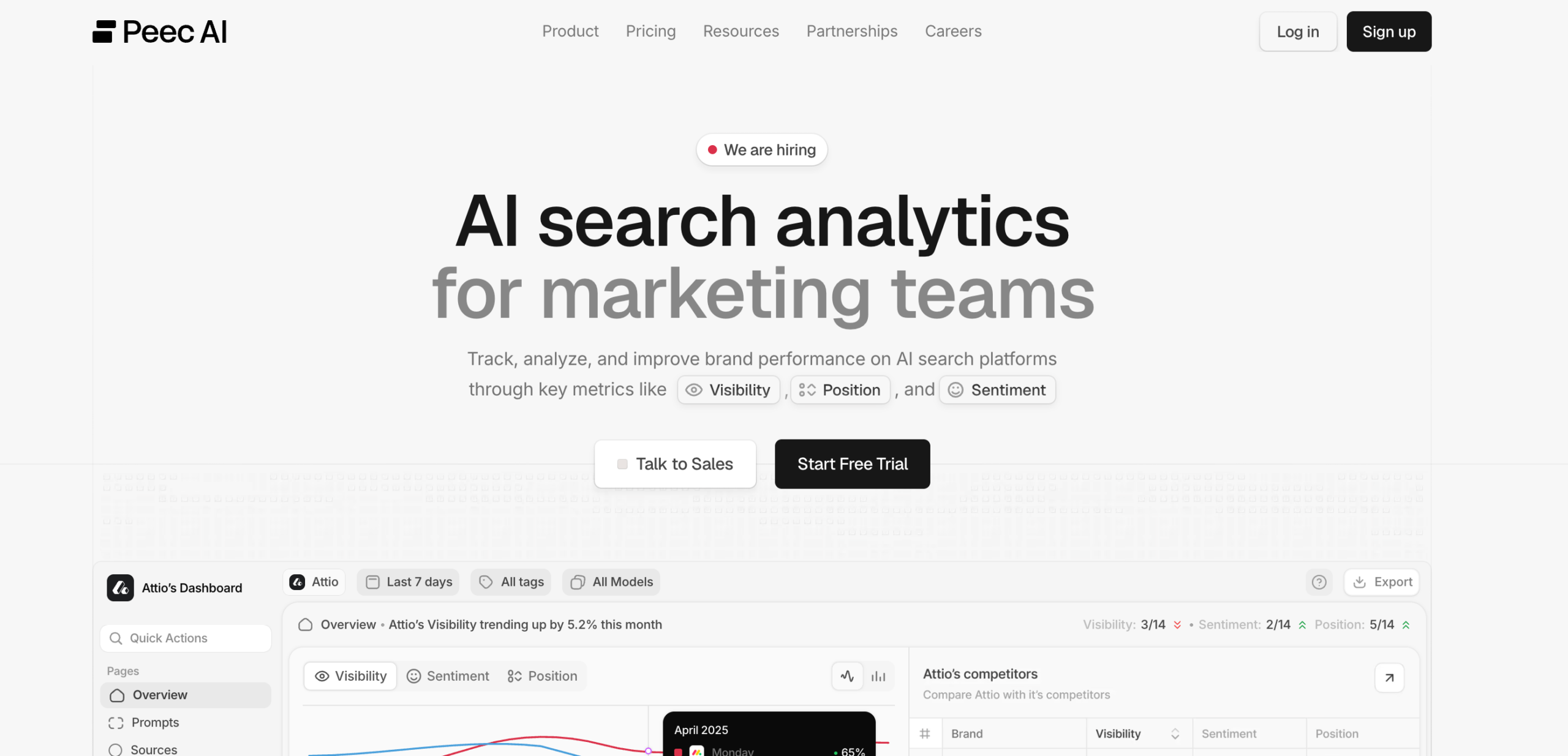
Best for: Agencies prioritizing clear dashboards and trend tracking.
Provides a focused look at brand appearance, competitive visibility and how answers change over time. Its relatively concentrated scope may make reporting easier to explain to nontechnical stakeholders.
Key strengths: AI answer monitoring, visibility trends, client dashboards.
Consider before choosing: It is not a substitute for content operations or technical implementation. Make sure the reporting covers the AI products and languages important to your clients.
7. Semrush
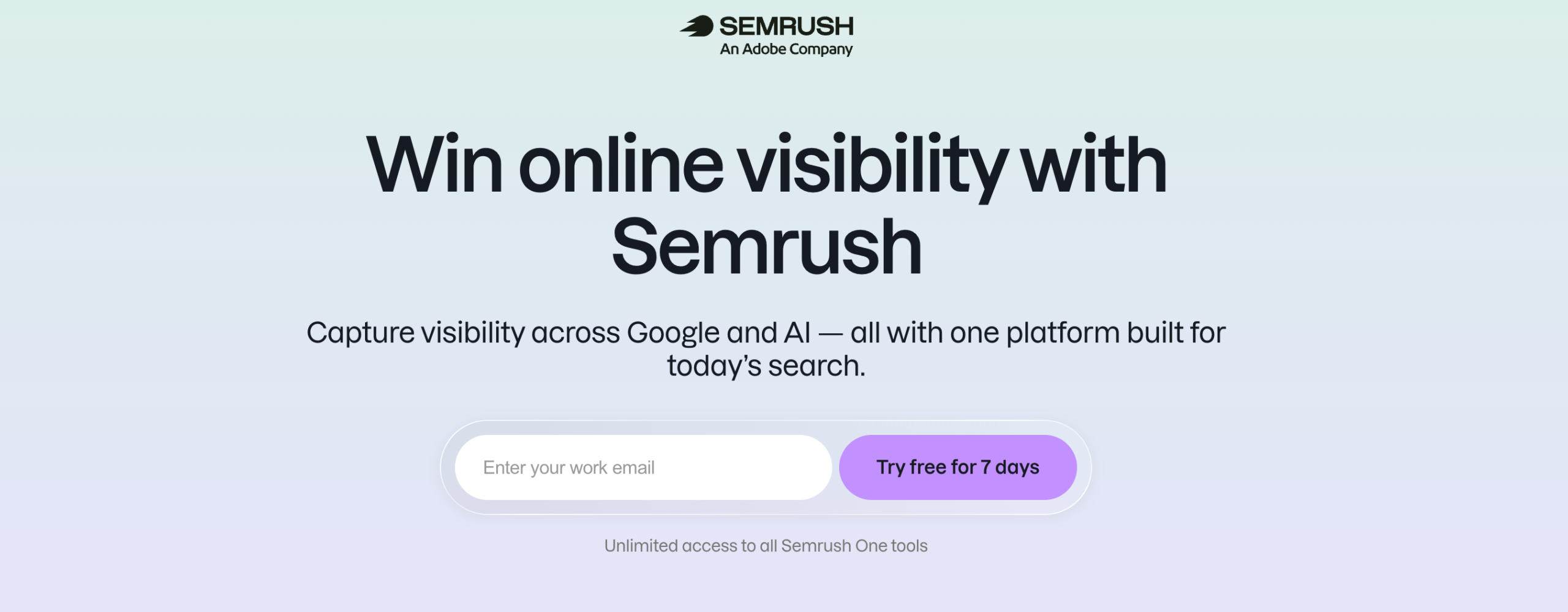
Best for: Agencies already invested in Semrush SEO tools.
Offers a convenient route from search keyword research and competitive analysis toward AI visibility questions without abandoning the wider SEO workflow.
Key strengths: SEO and AI research, competitor analysis, consolidated workflows.
Consider before choosing: AI features, tracking frequency and geographic coverage may differ from the core SEO suite. Check plan entitlements and treat modeled prompt information cautiously.
8. Ahrefs
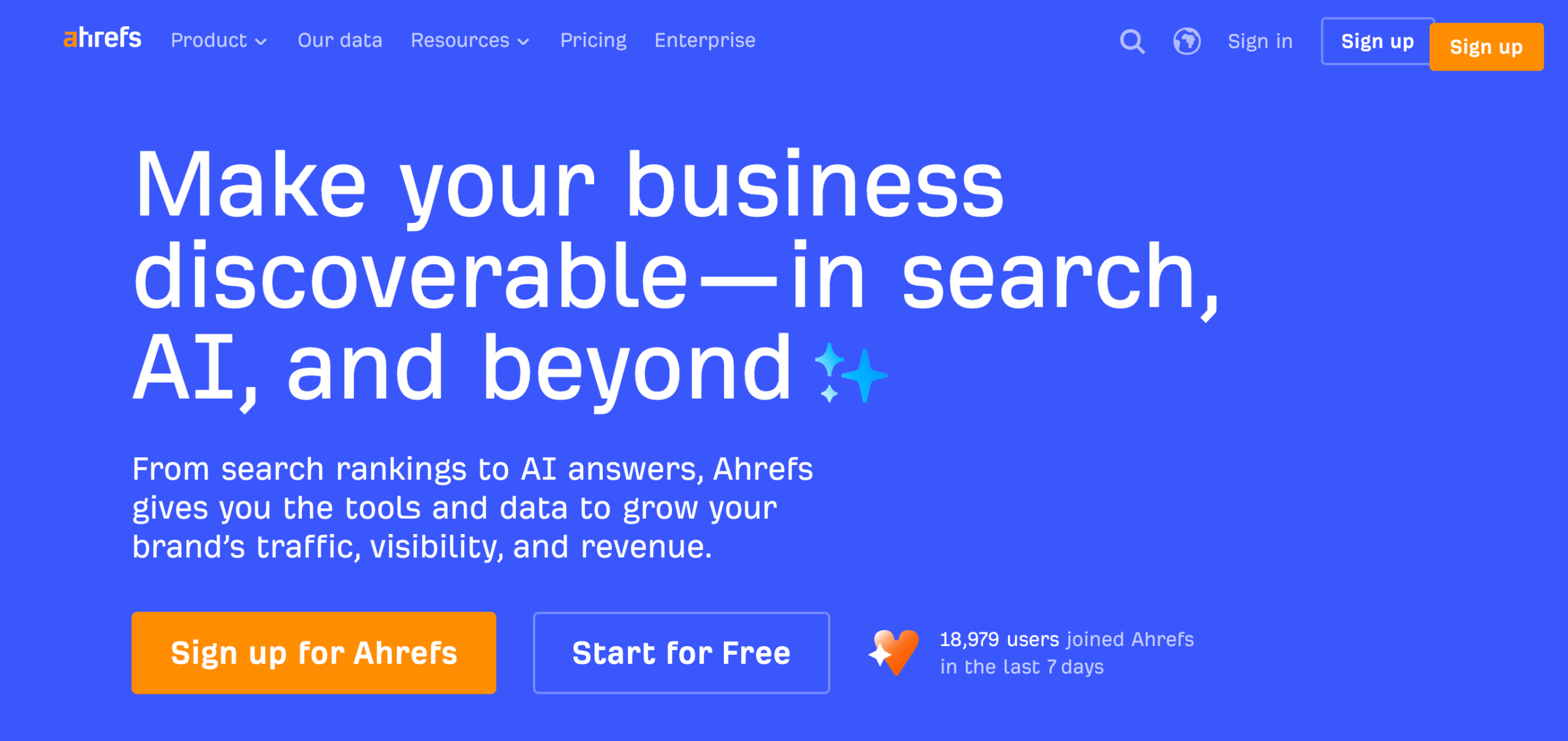
Best for: SEO-first teams expanding into AI search.
Brand Radar gives established Ahrefs users a way to investigate which brands appear in AI-assisted discovery alongside their existing keyword and backlink research.
Key strengths: Brand Radar, SEO research, competitive intelligence.
Consider before choosing: AI answer tracking is not identical to search ranking measurement. Verify the sampling, refresh intervals and channels that matter for client reporting.
9. AirOps
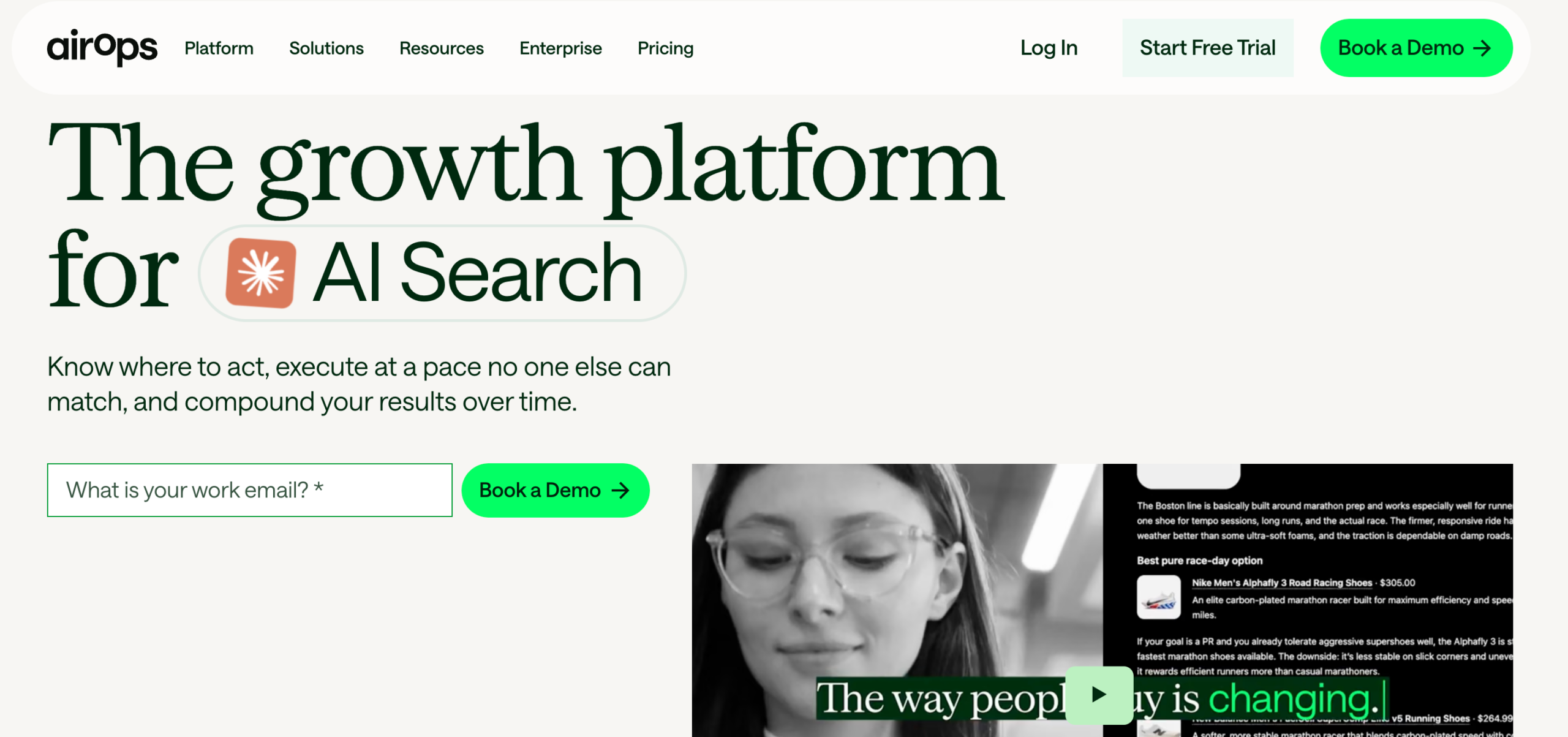
Best for: Technical content teams running repeatable optimization projects.
Offers structured workflows for organizing research, updating content and carrying out recurring editorial operations over many URLs. It can be valuable when implementation throughput is the bottleneck.
Key strengths: Content operations, workflow automation, scaled page refreshes.
Consider before choosing: Workflow design and quality control require operational effort. Agencies should build in subject-matter review rather than auto-publishing drafts without checks.
10. Writesonic
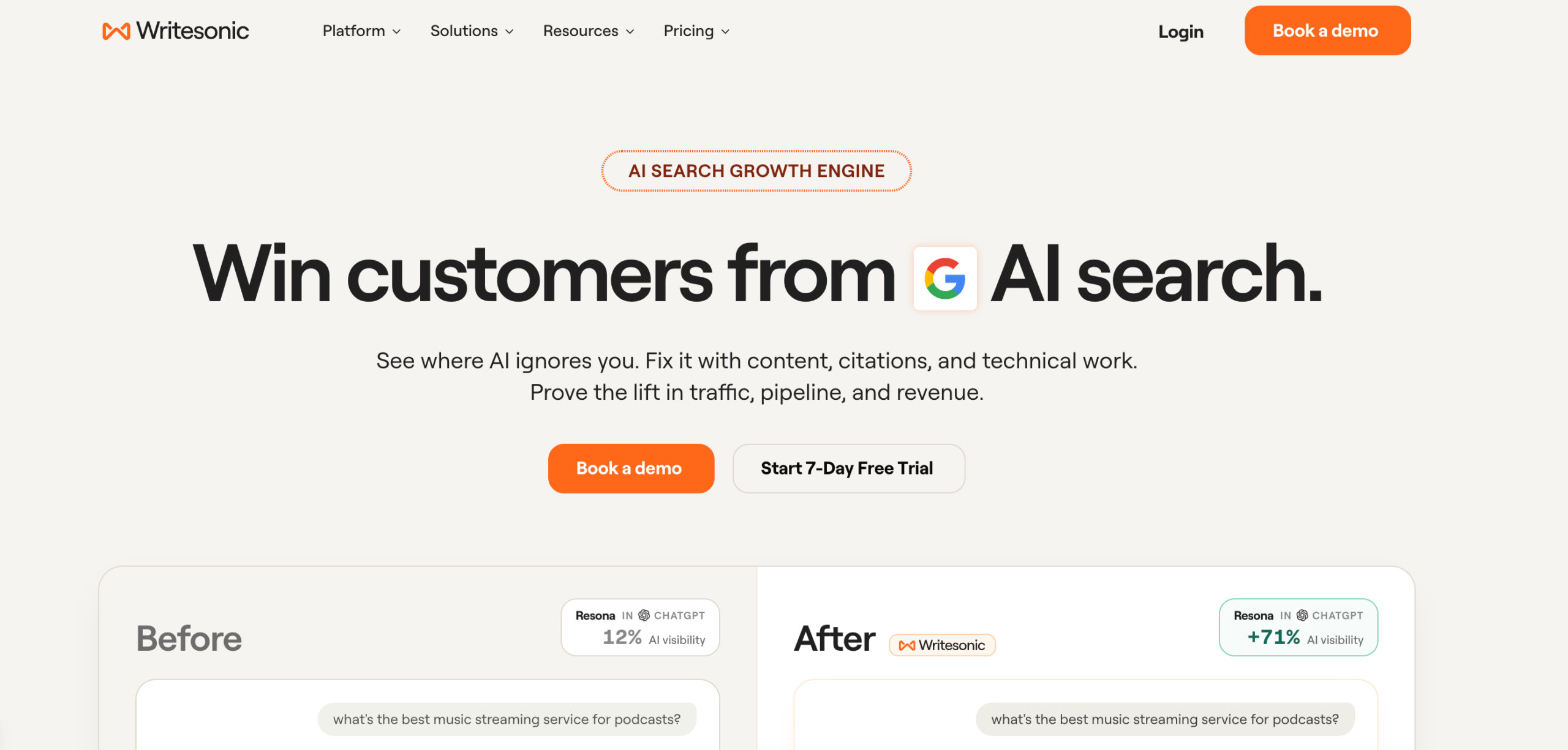
Best for: Agencies whose main priority is faster content drafting.
Provides assisted research and writing workflows that can help teams prepare content briefs and initial article drafts efficiently.
Key strengths: AI-assisted content creation, SEO writing, editorial throughput.
Consider before choosing: Generated copy still needs expert fact-checking, differentiation and brand editing. A high content output does not automatically translate into better AI citations.
11. Conductor
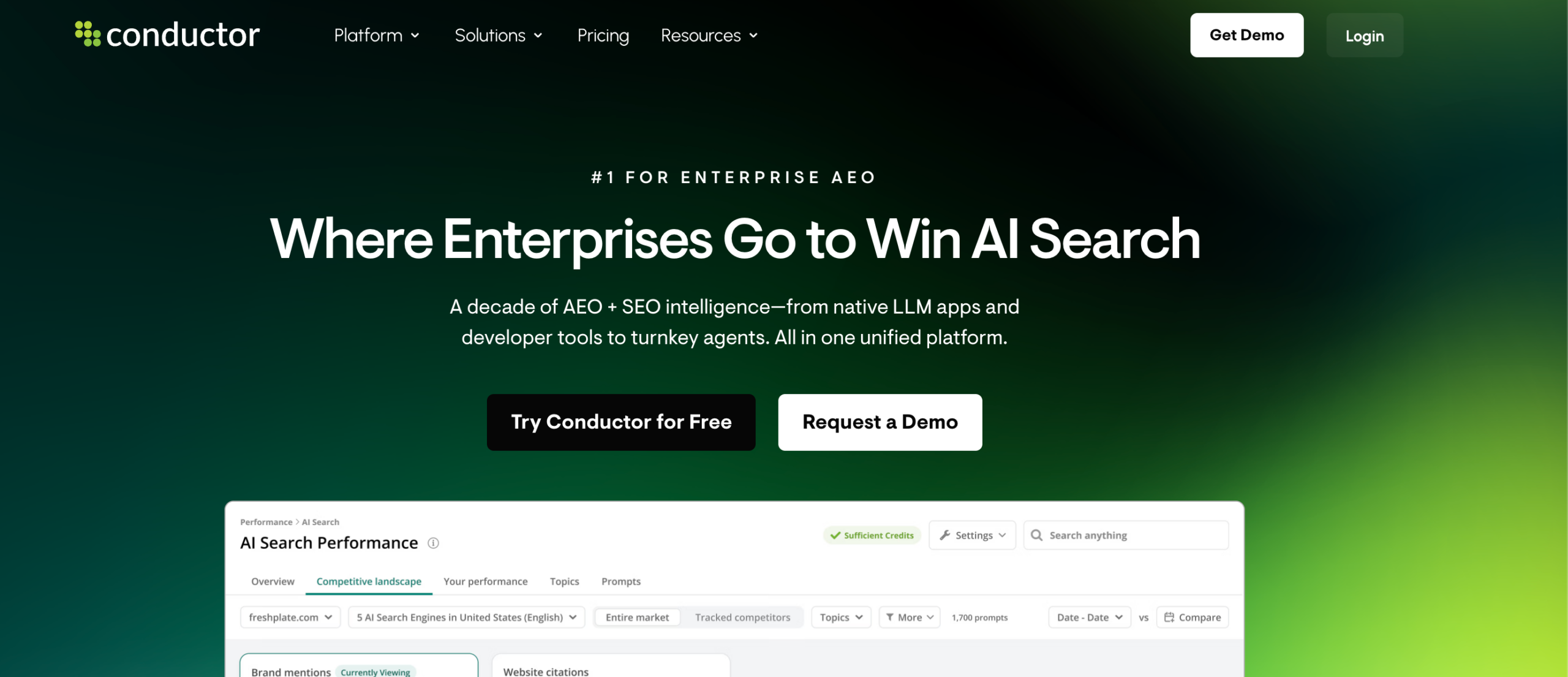
Best for: Enterprise agencies with mature SEO operations.
Presents AI visibility alongside a larger enterprise search platform, potentially reducing tool fragmentation for organizations already using its workflows.
Key strengths: Enterprise SEO, cross-market reporting, operational oversight.
Consider before choosing: Teams purchasing solely for AI monitoring should compare implementation effort and measurement detail with specialist tools.
12. BrightEdge
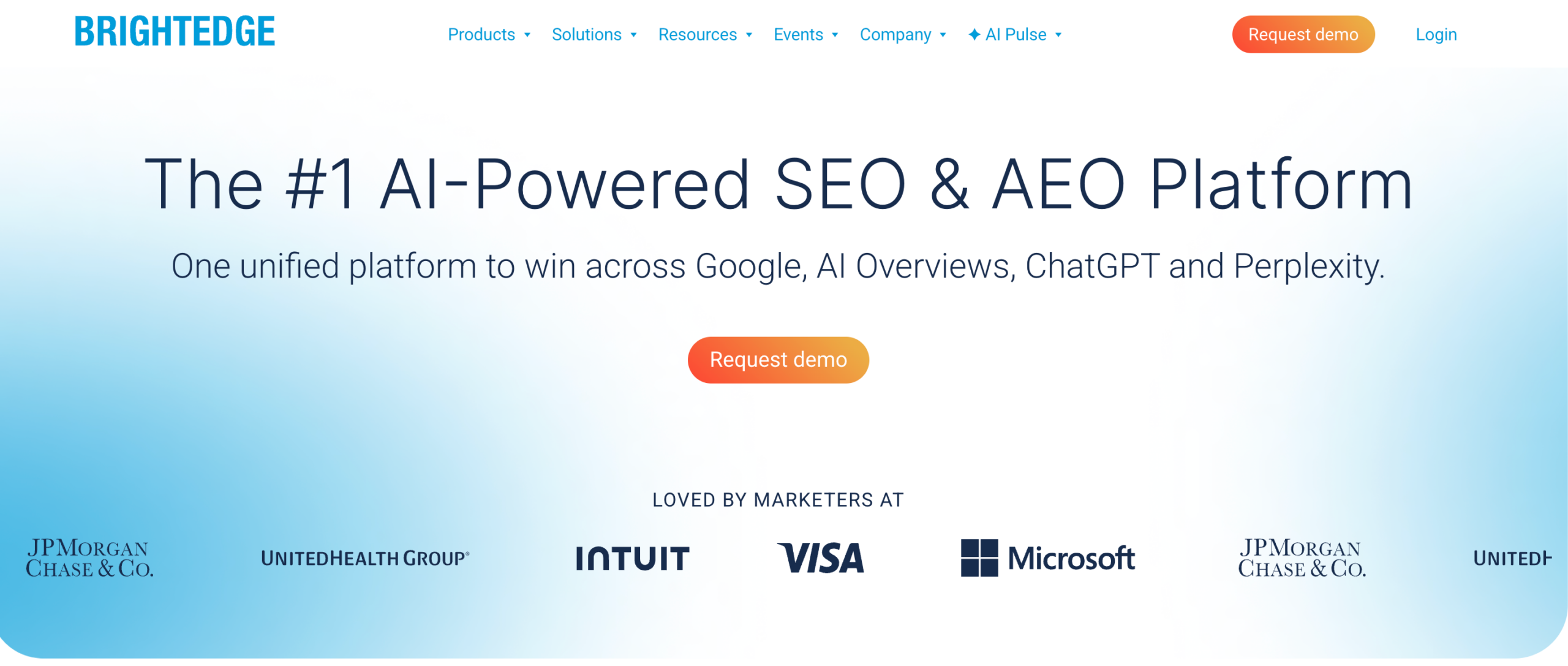
Best for: Large brands working on entities and search relevance.
An enterprise-oriented choice for connecting search insights, brand topics and content opportunities, particularly where an organization already relies on structured SEO processes.
Key strengths: Entity-led content, enterprise optimization, SEO analytics.
Consider before choosing: A broad SEO feature set does not guarantee the same depth in every AI-answer engine. Ask how the platform collects and validates its AI search data.
13. Bluefish
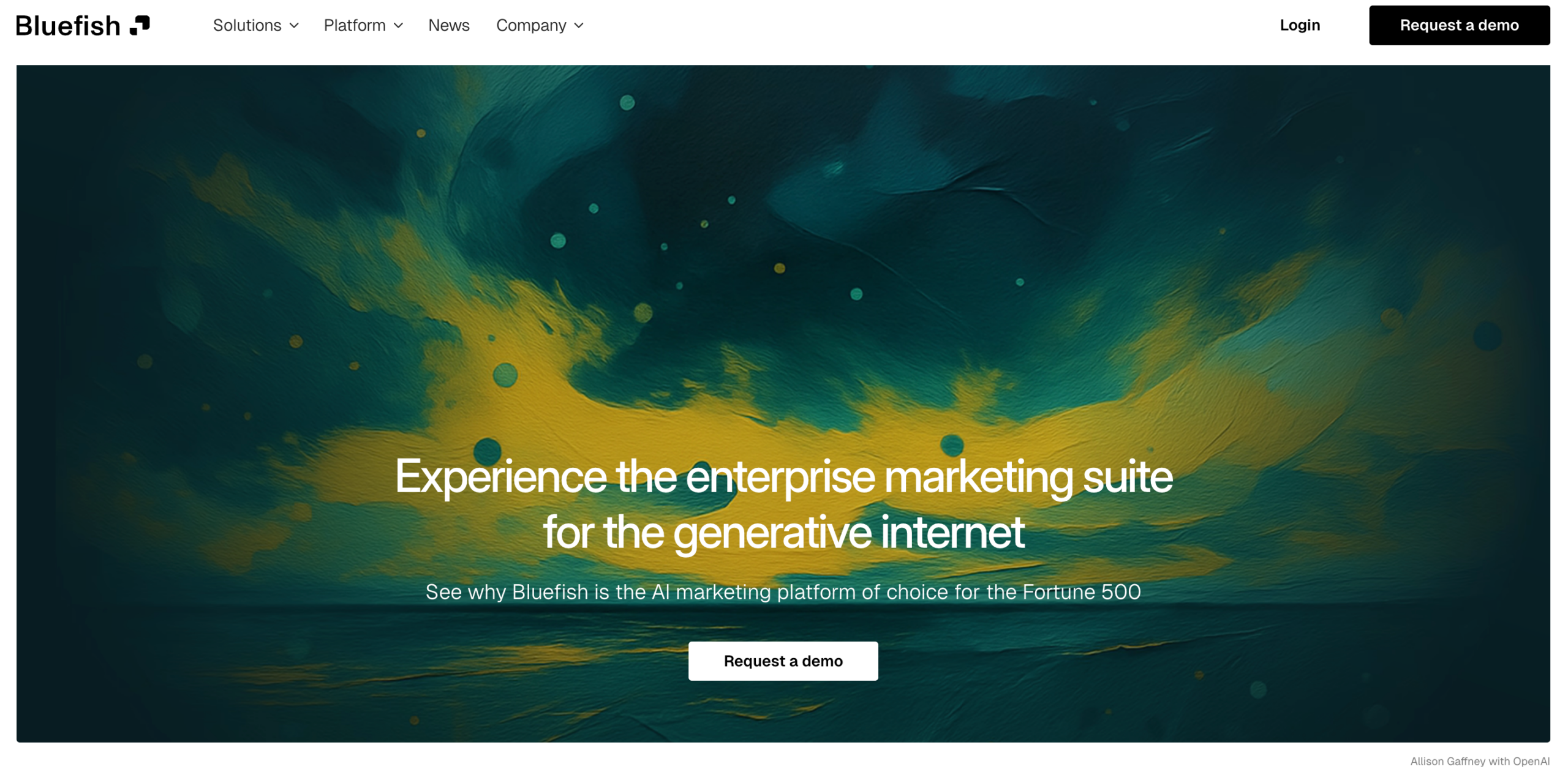
Best for: Brand and communications teams monitoring AI narratives.
Approaches AI discovery through brand perception, reputation and the language models use when describing a company. That emphasis can matter for sensitive or highly regulated industries.
Key strengths: Brand perception, reputation analysis, AI answer monitoring.
Consider before choosing: Its monitoring-centric approach may need to be paired with a separate SEO implementation and content publishing workflow.
14. Evertune
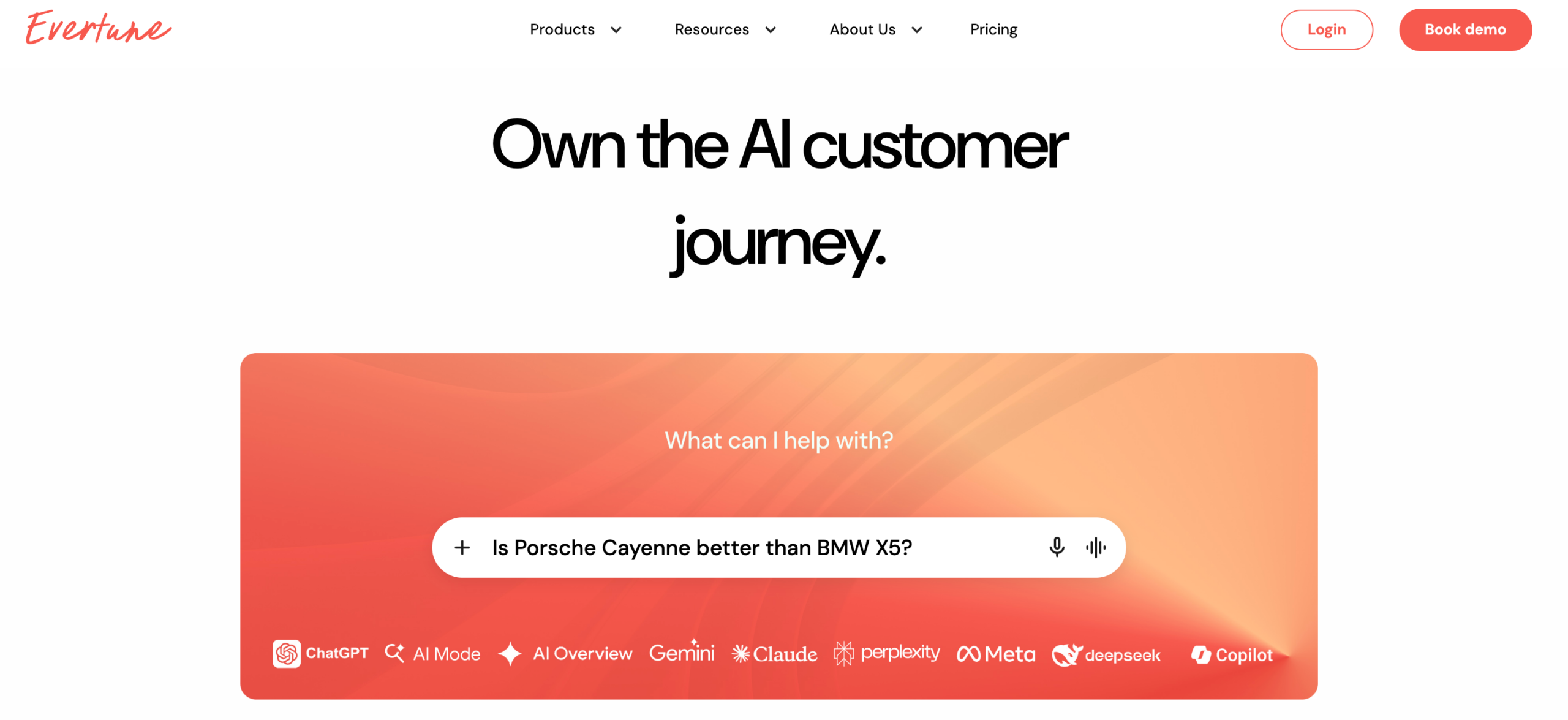
Best for: Teams tracking how AI describes brands and categories.
Provides a brand-intelligence lens on AI-generated recommendations, making it relevant to agencies focused on narrative accuracy, competitive associations and perception.
Key strengths: Brand intelligence, sentiment, AI category analysis.
Consider before choosing: Validate how sentiment and topic groupings are created and whether the resulting measures are actionable at the page or campaign level.
15. Adobe LLM Optimizer
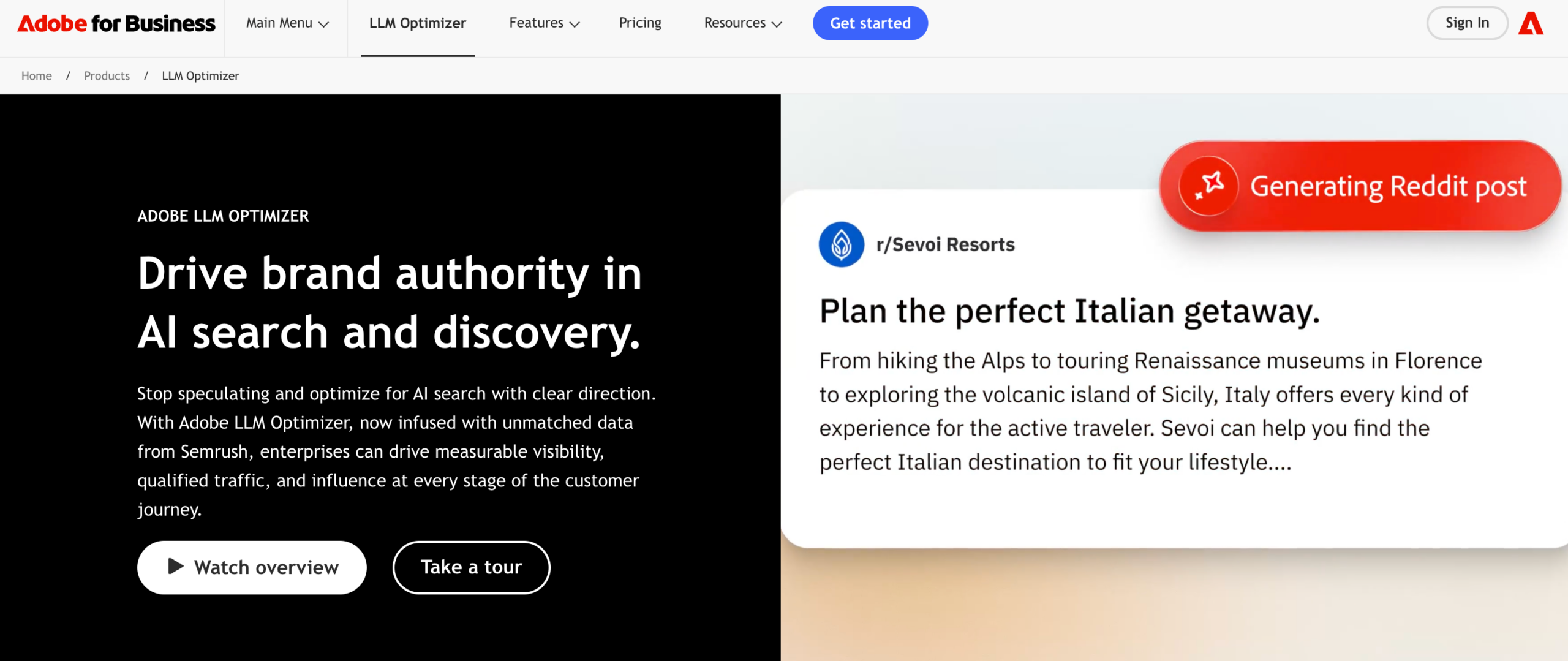
Best for: Enterprise clients with an existing Adobe ecosystem.
A potentially practical option where Adobe analytics and experience tools are already central to reporting. It places AI visibility within an established enterprise technology stack.
Key strengths: Adobe ecosystem integration, enterprise attribution, optimization opportunities.
Consider before choosing: An Adobe-centered approach can increase complexity for smaller teams. Compare data collection and implementation requirements against independent alternatives.
16. SE Visible
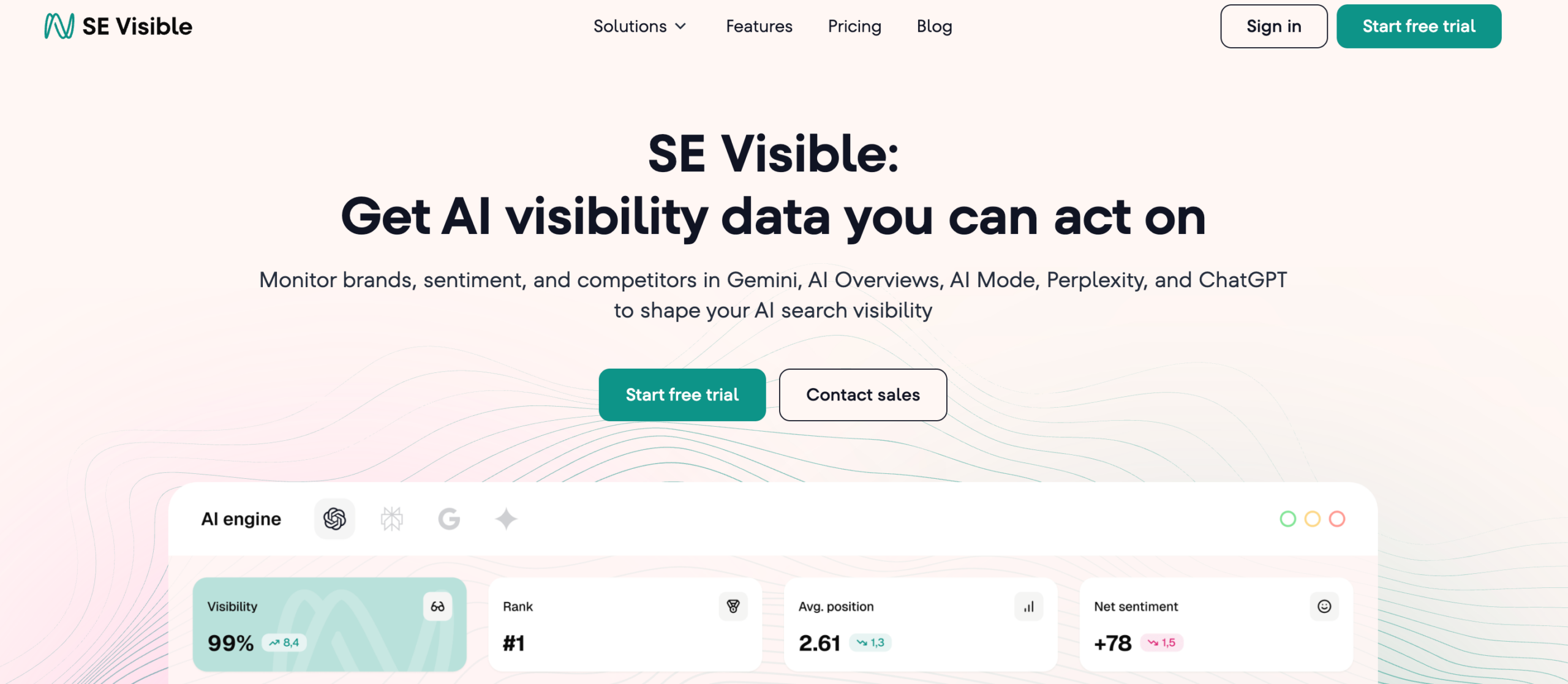
Best for: Cost-conscious agencies seeking standalone AI visibility.
A narrower product aimed at brand mentions and citations in AI responses, potentially useful for initial monitoring across several client brands.
Key strengths: Brand mention monitoring, entry-level AI reporting, multi-brand reviews.
Consider before choosing: The available engine coverage, integrations and volume limits are worth checking carefully as the product evolves.
17. AIclicks
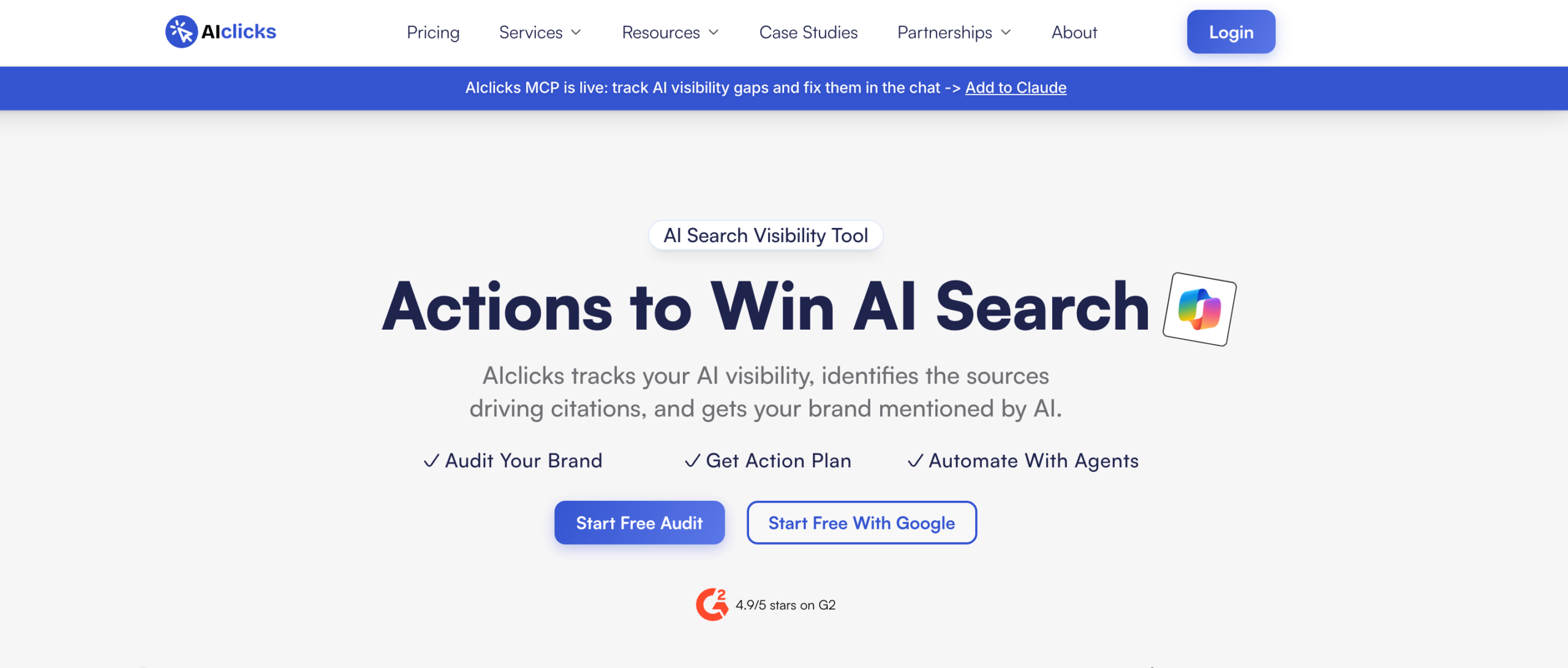
Best for: Agencies exploring AI visibility with content and outreach workflows.
Combines visibility observations with recommendations related to content, citations and third-party mentions. It may suit agencies that prefer action-oriented workflows.
Key strengths: AI discoverability, content recommendations, outreach ideas.
Consider before choosing: As with any automation-heavy system, check content quality and whether reporting can substantiate changes in real leads and revenue.
18. Brandlight
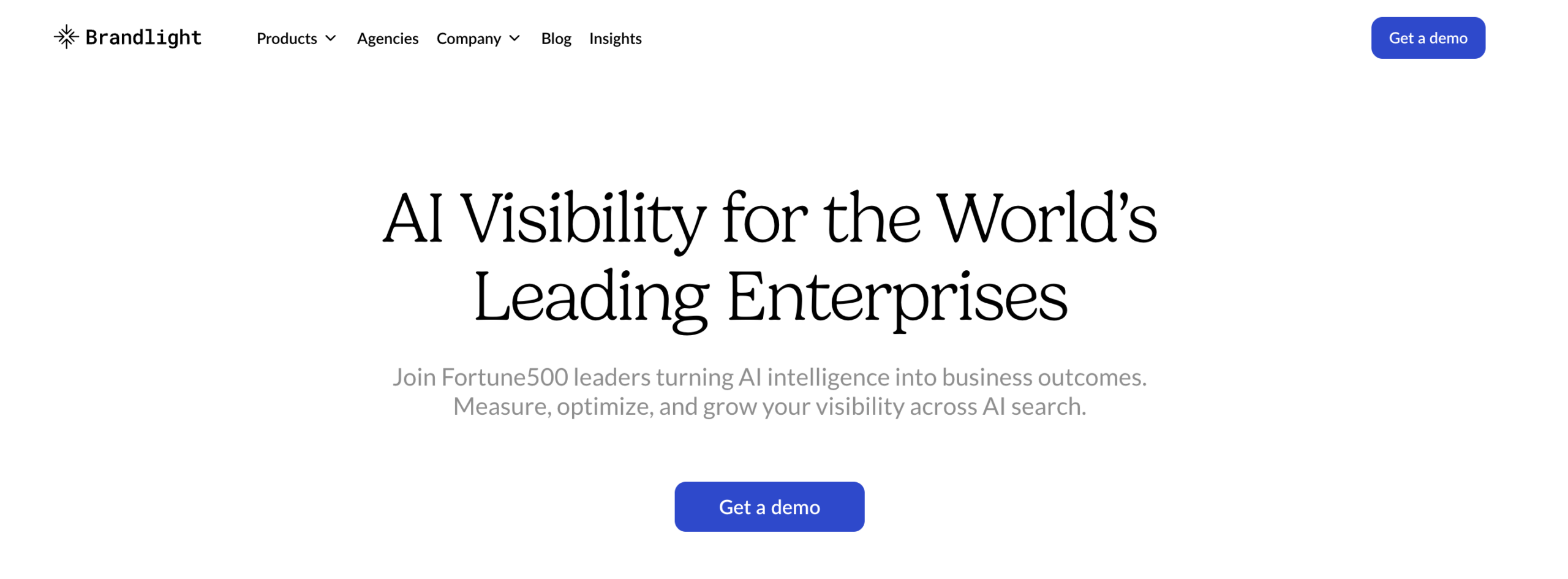
Best for: Enterprise teams examining the sources behind AI responses.
Emphasizes the websites and publishers that inform AI brand recommendations, offering a useful perspective for digital PR and earned-media teams.
Key strengths: Source attribution, earned-media intelligence, brand monitoring.
Consider before choosing: Source influence varies by platform and prompt. Agencies should avoid implying that a mention on any individual website guarantees inclusion in AI answers.
Which Tool Is Right for Your Agency?
If your clients are primarily in Latin America, begin with the actual Spanish-language prompts buyers use and examine Fardo’s regional proposition. If your team needs enterprise multi-account operations, evaluate Profound, Conductor or BrightEdge against your workflows. For simple recurring AI monitoring, shortlist Otterly, Peec AI or SE Visible. For teams already relying on traditional SEO software, explore the AI capabilities offered by Semrush or Ahrefs before adding another subscription.
The best choice may be a combination. One tool might handle SEO diagnostics, another AI visibility reporting and your CMS the final implementation. Avoid buying a complicated stack until you know the questions your clients actually need answered.
A Practical AI Visibility Workflow for Agencies
- Define 15–30 realistic buyer questions by product, location and intent.
- Record baseline brand inclusion, relevant competitors, cited sources and response context.
- Identify content gaps: missing service explanations, unclear entity information, absent evidence or weak third-party coverage.
- Make quality-controlled website and content changes, then reassess using comparable prompts.
- Report changes alongside impressions, search visits, qualified enquiries and CRM outcomes—keeping correlation distinct from causation.
Frequently Asked Questions
What is an AI visibility tool?
It helps monitor how brands, competitors and sources appear in generated responses from AI assistants and AI-enhanced search experiences.
Is AI visibility the same as SEO?
No. They overlap in content quality and accessibility, but AI visibility focuses on representation inside generated answers rather than only web-page positions.
Which AI visibility tool is best for LATAM?
Fardo is our Editor’s Choice for the LATAM use case because of its regional positioning. Validate specific markets, capabilities and terms before purchasing.
Can agencies use these tools for prospecting?
Yes. A well-scoped visibility assessment can uncover gaps in how a potential client is represented in relevant AI answers, but avoid treating one prompt as definitive.
Should I track every AI model?
Start with the models your buyers actually use and add others when reporting value justifies the cost.
Can AI visibility improvements guarantee sales?
No. Mentions and citations are indicators; track qualified leads and sales separately and avoid promising rankings, citations or revenue.
How Velautec Approaches AI Search Visibility
At Velautec Media, we recommend starting with the customer journey: what prospects ask, which competitors appear, whether the answers accurately describe the business, and what can be improved on the website. Traditional SEO, technical accessibility, helpful content and measurable commercial outcomes remain essential.
Editorial note: Product descriptions summarize available information and may change. Screenshots for the 18 tools are externally hosted by the reference publisher and can become unavailable; review image-use rights before publishing. The Fardo links are included by editorial request.


