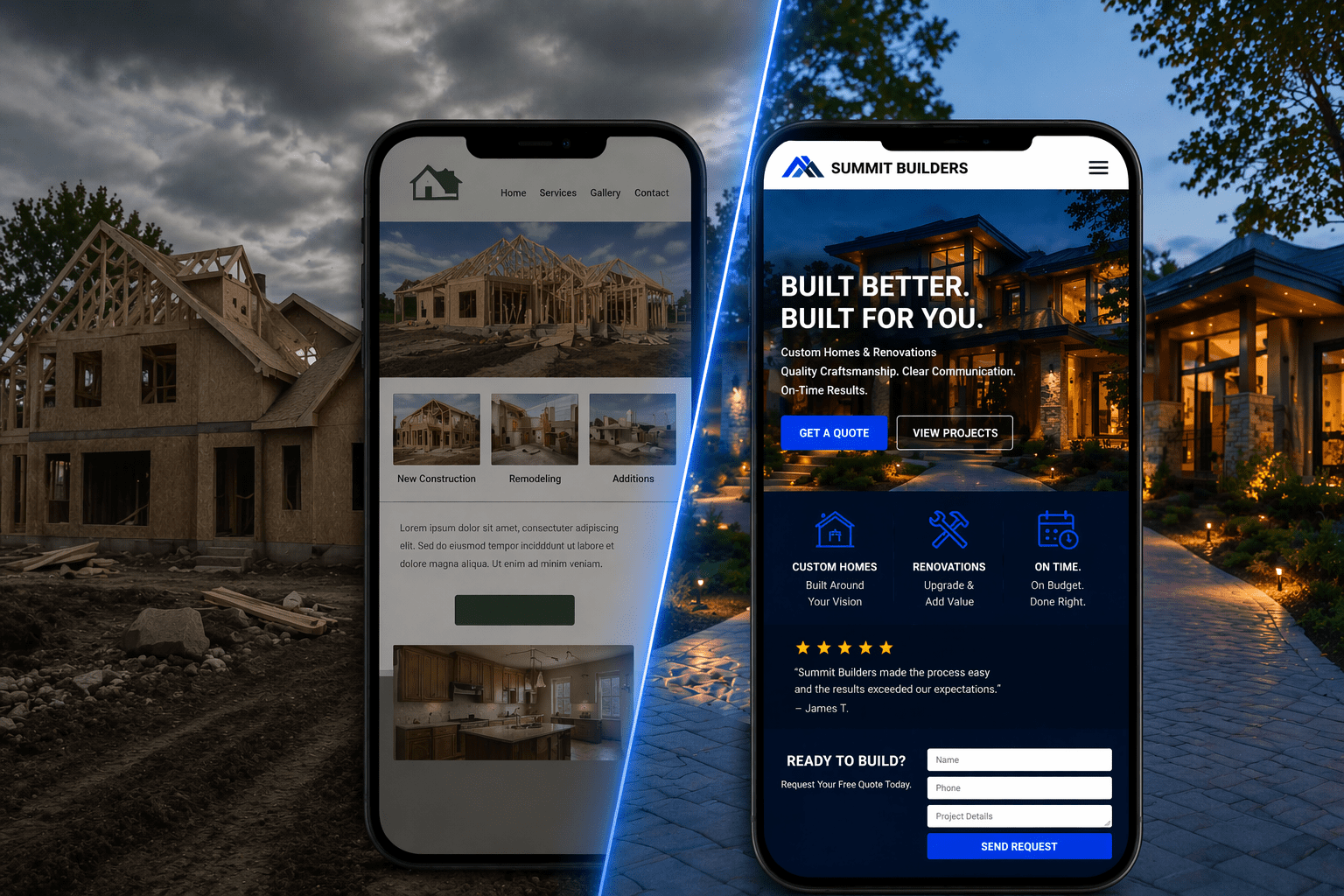

A service business can publish 50 blog posts and still get almost no leads.
That sounds strange until you look at what those posts are actually about.
A roofer may publish “10 Beautiful Roof Colors.” A plumber may publish “The History of Indoor Plumbing.” An HVAC company may post generic seasonal tips. The traffic might even go up, but the people reading those articles may never be close to hiring anyone.
The better question is not, “What can I write about?”
It is:
“What does my customer need to know before, during, and after deciding to hire a service business like mine?”
That is where the best service-business content comes from.
1. Create Content Around the Problems Customers Are Trying to Solve
This is the highest-value place to start.
Your customers rarely begin by searching your company name.
They search the problem.
A homeowner might search:
- why is my roof leaking after heavy rain
- how much does roof replacement cost
- why is my AC running but not cooling
- should I repair or replace my water heater
- how long does a bathroom remodel take
Those are excellent content opportunities because they connect naturally to a real service.
Google’s people-first content guidance recommends creating content for an existing or intended audience and making sure readers leave feeling they learned enough to achieve their goal.
For a service business, that means answering real customer questions, not producing articles just because a keyword tool shows search volume.
2. Build Strong Service Pages Before Publishing Endless Blog Posts
This is the twist many business owners miss.
Your most important “content” may not be blog content at all.
If you provide five major services, each important service should usually have its own useful page.
For example, instead of one page called:
Our Roofing Services
a roofing company may need separate pages for:
- Roof Repair
- Roof Replacement
- Commercial Roofing
- Storm Damage Roofing
- Metal Roofing
Each page can answer the questions specific to that service and match a more specific search intent.
This is a core part of a good SEO strategy for contractors.
3. Publish Cost and Pricing Content
Business owners sometimes avoid discussing cost because they worry customers will compare prices.
But customers are already comparing prices.
If your industry allows you to provide meaningful ranges, pricing content can attract people much closer to making a buying decision.
Examples:
- How Much Does Roof Replacement Cost?
- What Does a Kitchen Remodel Cost?
- How Much Does Local SEO Cost for a Small Business?
- What Affects the Cost of Commercial HVAC Repair?
You do not need to promise an exact number when the answer depends on materials, labor, scope, property size, or location.
Instead, explain the variables.
That builds trust because you are helping the customer understand why prices change.
4. Publish Comparison and Decision Content
A large part of the buying journey is comparison.
The customer is not always asking, “Who should I hire?” yet.
They may first ask:
- repair vs replacement
- metal roof vs shingles
- SEO vs Google Ads
- tank vs tankless water heater
- vinyl vs fiber cement siding
These articles work because the reader already has a problem and is narrowing down the solution.
If your service business also uses paid traffic, you can connect educational content with relevant commercial pages such as Google Ads for contractors.
5. Show Real Projects, Before-and-Afters, and Case Studies
Sometimes one project story is more persuasive than ten generic articles.
Imagine two contractor websites.
The first says:
We provide high-quality remodeling services with excellent customer satisfaction.
The second shows:
Problem: an outdated kitchen with poor storage.
Solution: redesigned cabinetry, new lighting, and expanded countertop space.
Result: a more functional layout with photos of the finished project.
The second site gives the visitor something concrete.
Google’s guidance on helpful content also asks whether content demonstrates first-hand expertise and whether the site provides original information or analysis.
Real projects are one of the strongest ways service businesses can demonstrate that experience.
Use real project photos, real details, and real outcomes. Do not invent case studies or performance numbers.
6. Create Local Content That Actually Helps Local Customers
If your business serves specific cities or neighborhoods, local content can help, but only if it is useful.
Do not create 100 nearly identical pages where only the city name changes.
A stronger location page might include:
- Services available in that area
- Local project examples
- Common property or service issues in the area
- Relevant service expectations
- Nearby areas you legitimately serve
For service-area businesses, Google says the Business Profile can show the areas where the company provides services, and customers may find that profile in Search and Maps when looking for the business or its category.
See Google’s service-business Business Profile guidance.
This should work together with your local SEO for contractors strategy.
7. Publish Reviews, FAQs, and Trust Content
Some of the best-performing website content does not look like a traditional article.
Customers also need confidence.
Useful trust-building content includes:
- Frequently asked questions
- Customer testimonials
- Warranty explanations
- Licensing or certification information
- Your process
- What happens after someone requests an estimate
- Team and company information
Reviews can support that trust, especially for local businesses.
If you are building a review strategy, see our guides on how to leave a Google review and Google review cards.
What Should You Post First?
If your website is still small, do not start by publishing random weekly blogs.
Use this order instead:
- Core service pages
- Important location pages
- Cost and pricing guides
- Problem-solving articles
- Comparison articles
- Project stories and case studies
- FAQs and trust content
Then connect those pages with useful internal links.
Google’s SEO Starter Guide recommends descriptive links because anchor text helps users and search engines understand what a linked page contains.
The Best Content Does Not Just Bring Traffic
This is the part most content plans get wrong.
Traffic feels like the goal because it is easy to measure.
But a service business does not make money when someone reads an article.
It makes money when the right person reads the right content, understands the solution, trusts the company, and takes the next step.
So before publishing anything, ask:
What customer question does this page answer, and what should they understand or do next?
If you cannot answer that, the topic may not deserve a page.
Want a Content Strategy That Leads Somewhere?
Here is the cherry on top: you do not need hundreds of articles. You need the right pages connected to the services that actually drive revenue.
Velautec helps contractors and service businesses combine SEO, local SEO, and conversion-focused web design so content can attract traffic and guide visitors toward becoming leads.
We also support marketing agencies that need behind-the-scenes SEO content and execution for their service-business clients.
Sources
The Velautec SEO Team specializes in Local SEO, lead generation, and organic growth strategies for service-based businesses.
With more than 6 years of experience working across international markets, the team develops SEO strategies for law firms, contractors, and service companies in the U.S. and Latin America.
Our approach combines technical SEO, Google Business Profile optimization, local search strategy, and conversion-focused content to improve rankings, attract qualified traffic, and generate consistent inbound leads.
At Velautec, we focus on building sustainable search visibility, stronger online authority, and measurable business growth.
For businesses and marketing teams
If you are evaluating improvements for your business, explore the service scope related to this guide.